
Side Dishes
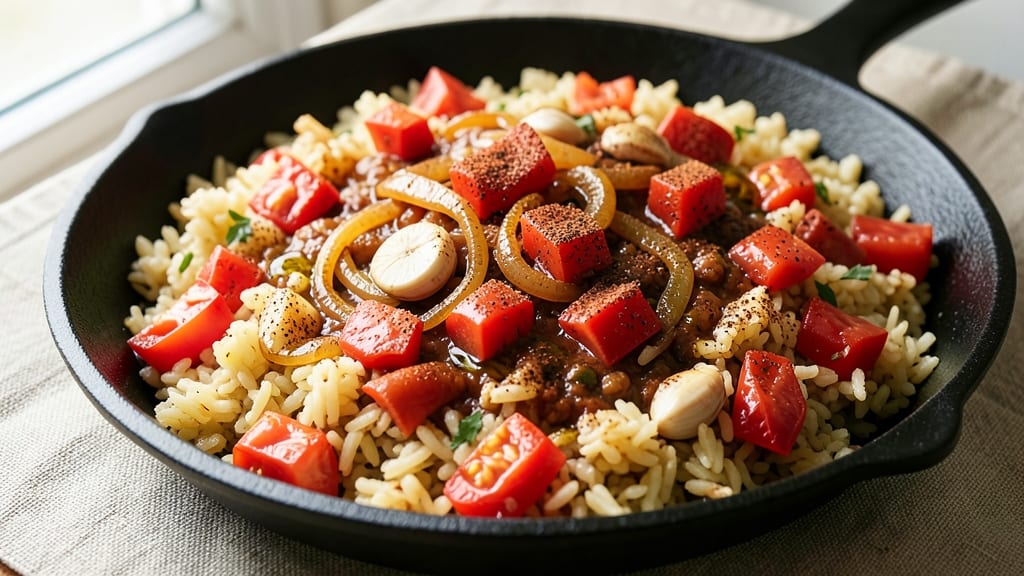
This Spanish rice with vegetables recipe transforms a simple side into a vibrant, paella-inspired centerpiece that brings Mediterranean flair to any table. The secret lies in slow-cooked tomatoes, smoky paprika, and a pinch of saffron that infuse every grain with warm, aromatic depth—no fancy equipment required.
I perfected this version after years of testing, balancing traditional techniques with modern convenience for a dish that’s both restaurant-worthy and weeknight-friendly.
The beauty of this one-pot method is how it builds flavor layer by layer. Sautéed bell peppers and onions form the base, while Arborio rice absorbs the rich tomato sauce as it cooks, creating a dish that’s creamy yet distinct from risotto.
A splash of white wine brightens the sauce, and saffron adds that signature golden hue and earthy aroma. The result? A fragrant, colorful rice dish that’s as satisfying as it is visually striking.
What you’ll end up with is a one-pot wonder—tender rice grains coated in a savory, slightly sweet tomato sauce, studded with crisp-tender vegetables and finished with a sprinkle of fresh parsley.
It’s the kind of dish that pairs effortlessly with grilled meats, fish, or even on its own as a hearty vegetarian main. The best part? It comes together in under 45 minutes with minimal cleanup.
For extra protein, stir in shrimp or chicken during the final minutes, or keep it vegetarian with chickpeas or white beans. Serve family-style in a cast-iron skillet for that authentic paella presentation, or divide into bowls for easy meal prep.
Here’s how to make it—step by step—for vibrant, flavorful results every time.
Ingredients for spanish rice with vegetables
Transform simple pantry staples into vibrant paella-inspired Spanish rice with vegetables.
| Ingredient | Amount | Notes |
|---|---|---|
| Arborio Rice 🍚 | 1 ½ cups | Uncooked, rinsed thoroughly |
| Red Bell Pepper 🌶️ | 1 whole | Diced, seeds removed |
| Yellow Onion 🧅 | 1 whole | Diced, medium size |
| Garlic Cloves 🧄 | 4 cloves | Minced, fresh preferred |
| Canned Diced Tomatoes 🍅 | 14 ½ oz | San Marzano preferred, no salt added |
| Smoked Paprika 🌶️ | 1 tbsp | High quality, not sweet |
| Saffron Threads 🌼 | ⅛ tsp | High-grade, crushed |
| Dry White Wine 🍷 | ½ cup | Sauvignon Blanc preferred |
| Chicken Broth 💧 | 1 ½ cups | Low-sodium, homemade preferred |
| Fresh Parsley 🌿 | ¼ cup | Chopped, for garnish |
| Extra-Virgin Olive Oil 🫒 | ½ cup | High quality, fruity |
| Diamond Crystal Kosher Salt 🧂 | 1 ½ tsp | Fine grain preferred |
| Ground Black Pepper 🌶️ | ½ tsp | Freshly ground preferred |
The Arborio rice is non-negotiable—its high starch content creates that signature creamy texture. Lundberg or Calrose are excellent choices, but any Arborio will work. For the tomatoes, San Marzano cans from Whole Foods or Trader Joe's elevate the dish with their natural sweetness. Saffron is the secret weapon here: Spanish saffron from Penzeys delivers the most authentic flavor, though it's pricey. The white wine should be dry—Sauvignon Blanc or Pinot Grigio from a trusted vineyard adds brightness without overpowering. Fresh garlic and parsley are worth the extra cost for maximum flavor impact.
No saffron? Turmeric at one-quarter the amount mimics the color, though it lacks the aroma. Substituting white wine with extra chicken broth works in a pinch, but the acidity is crucial. For the bell pepper, red or yellow both work—just keep the skin on for extra color. If you're short on time, frozen chopped bell peppers (thawed and drained) maintain texture surprisingly well. The smoked paprika adds depth—substitute with regular paprika plus a pinch of liquid smoke if needed. For the broth, low-sodium is essential to control seasoning balance.
This dish reheats beautifully—just add a splash of water or broth to prevent drying. Store in an airtight container for up to 5 days in the fridge, or freeze portions for 3 months. The rice continues to absorb flavors overnight, making leftovers even more delicious. For meal prep, cook a double batch and portion into containers—perfect for lunches or quick dinners. The cast-iron skillet keeps everything warm while serving, maintaining that restaurant-quality presentation.
Why You'll Love This Recipe
- One-Pot Magic: I swear by this recipe—just toss everything into one skillet, stir occasionally, and walk away. The Arborio rice soaks up all the juices from the tomatoes and peppers while the onions caramelize right in the pan. No fancy equipment, no stress.
- Garlic Bomb Flavor: That moment when you crush fresh garlic into the sizzling oil? Pure satisfaction. The cloves mellow into a deep, savory sweetness that clings to every grain of rice, while the bell peppers add a bright crunch that keeps it from feeling heavy.
- Meal Prep MVP: Between us, this is my go-to for lunches all week. The rice holds up beautifully when reheated—just add a splash of water and a quick stir. Pack it cold in containers, and it’s still hearty enough to feel like a proper meal, not sad leftovers.
- Budget-Friendly Staple: Honestly, this recipe costs me pennies but feels like a restaurant dish. Canned tomatoes and bell peppers from the sale bin stretch into multiple servings, and Arborio rice is cheaper than you’d think for that creamy, satisfying texture. My wallet and my family thank me every time.
Step-by-step instructions for Spanish rice with vegetables
Aromatic vegetables and saffron-infused broth create a vibrant one-pot dish. Follow these precise steps for perfect grain texture and balanced flavor.
Sauté the Vegetable Base
Heat the 0.5 cup extra-virgin olive oil in a heavy-bottomed skillet or paella pan over medium heat. Add the 1 whole diced yellow onion and 1 whole diced red bell pepper, cooking for 5-6 minutes until the vegetables soften and begin to caramelize at the edges. This foundational step develops deep flavor through the Maillard reaction.
Add the 4 minced garlic cloves and 1 tbsp smoked paprika, stirring constantly for 30 seconds until fragrant. The paprika will infuse the oil with its characteristic warmth, while the garlic prevents bitterness from lingering. Remove the pan from heat briefly to prevent burning—garlic burns faster than you might expect.
Toast the Arborio Rice
Return the pan to medium heat and add the 1.5 cups uncooked Arborio rice, stirring to coat each grain in the oil and vegetable mixture. Toast for 2-3 minutes until the rice turns opaque and develops a slight golden hue. This critical step releases the rice's starches, which will later create a creamy texture rather than a mushy one.
Here's the thing—don't walk away during this step. The rice should be constantly moving to prevent sticking. If it begins to brown too quickly, reduce heat slightly. The goal is even toasting without burning.
Deglaze and Build the Sauce
Pour in the 0.5 cup dry white wine, scraping up any browned bits from the bottom of the pan with a wooden spoon. Allow the wine to simmer for 2-3 minutes until fully evaporated. This deglazing step captures all the concentrated flavors you've built so far.
Add the 14.5 oz canned diced tomatoes, 1.5 tsp diamond crystal kosher salt, and 0.5 tsp ground black pepper, stirring to combine. The tomatoes will break down slightly, creating a rich base for the rice. Bring the mixture to a gentle simmer, then reduce heat to low—this prevents the rice from cooking too quickly on the surface.
Infuse with Saffron and Broth
Crush the 0.125 tsp saffron threads between your fingers to release their vibrant color and aroma, then sprinkle them directly into the simmering rice mixture. Stir gently to distribute evenly. Saffron is delicate—adding it too early would mute its floral notes.
Pour in the 1.5 cups chicken broth, ensuring the liquid just covers the rice by about ¼ inch. The rice should absorb the liquid gradually over time. Return to a gentle simmer, then cover the pan with a tight-fitting lid. Cook for 18-20 minutes without disturbing it—this allows the rice to absorb liquid evenly and develop its characteristic al dente texture.
Rest and Finish
Once the rice is tender with a slight bite (test by pressing a grain—it should resist slightly but still be creamy), remove the pan from heat. Let it rest, covered, for 5 minutes. This resting period allows residual heat to finish cooking the rice and redistribute any remaining moisture.
Uncover and fluff the rice gently with a fork, then stir in the 0.25 cup chopped fresh parsley. The parsley adds a bright finish that cuts through the richness of the saffron and tomatoes. Serve immediately while the rice is still warm, garnished with additional parsley if desired. The dish should have a vibrant golden hue from the saffron, with each grain distinct and the vegetables tender but still holding their shape.
Pro Tips For Making Spanish Rice With Vegetables
- TOAST THE RICE FIRST: Sauté Arborio rice in oil for 2-3 minutes before adding liquid—it builds flavor and prevents mushiness. (I used to skip this and ended up with bland, gummy rice every time.)
- CHOP ONIONS SMALLER THAN YOU THINK: Dice yellow onions into 1/4-inch pieces so they cook down evenly with the rice. Big chunks stay crunchy while the rest turns to paste—no one wants that.
- DON’T STIR THE RICE AFTER LIQUID ADDS: Once you add broth or tomatoes, let the rice sit undisturbed for 1-2 minutes to absorb liquid evenly. Stirring too soon just makes it gluey—like trying to fix wet sand with a spoon.
- USE HALF THE TOMATO JUICE: Drain canned tomatoes well and save the juice—only use about 1/4 cup. Too much liquid washes out the flavors and leaves you with sad, watery rice. (Yes, even if the recipe says otherwise.)
Serving suggestions for this spanish rice with vegetables
Family-Style Presentation
Serve this vibrant Spanish rice in its cast-iron skillet or paella pan straight from the stove—it’s the most authentic presentation. The golden saffron hue and colorful vegetables make it a stunning centerpiece for any meal.
I like to serve it family-style with tongs or wooden spoons so everyone can help themselves. This approach also keeps the rice warm and the flavors cohesive throughout the meal. 🍽️
Protein Pairings
For a complete meal, pair this rice with grilled shrimp or chicken thighs—both complement the smoky paprika and saffron. I often marinate the shrimp in lemon, garlic, and olive oil for 30 minutes before grilling, then toss them into the rice during the final 5 minutes of cooking.
For a vegetarian option, stir in white beans or chickpeas during the last 10 minutes to soak up the flavor.
Garnish Like a Pro
Fresh parsley is non-negotiable for brightness, but don’t stop there. A sprinkle of toasted almonds adds crunch, while a drizzle of extra-virgin olive oil enhances the dish’s richness. For extra flair, add lemon wedges on the side—squeezing fresh lemon over the rice at the table elevates the flavors instantly.
I also love a pinch of smoked paprika on top for a subtle, smoky finish.
Meal Prep Strategy
This dish reheats beautifully, making it perfect for meal prep. Store leftovers in an airtight container for up to 5 days in the fridge or freeze for 3 months. To reheat, add 2 tablespoons of water or broth per cup of rice and warm over medium-low heat until steaming.
The rice will absorb the liquid, restoring its creamy texture. For quick lunches, portion into individual containers and pack with a side of roasted vegetables or garlic bread.
Global Fusion Twists
Transform this dish into a fusion creation by adding coconut milk for a Thai-inspired version—simmer ½ cup with the broth for a creamy, slightly sweet twist. For a Mexican touch, stir in corn kernels and top with avocado slices and lime.
The saffron’s earthy notes work surprisingly well in both adaptations. I’ve even made a Moroccan-inspired version by adding cumin and raisins for a sweet-savory balance.
Dessert Pairing Surprise
Yes, you read that right! The saffron’s floral aroma pairs surprisingly well with orange-infused desserts. Serve this rice alongside orange sorbet or almond cake for a refreshing contrast. The citrus notes in the dessert complement the earthy saffron, creating a harmonious balance.
For a lighter option, offer sparkling water with orange slices—the effervescence cleanses the palate between bites. 🍊
Nutrition facts
Frequently asked questions about Spanish rice with vegetables
Can I substitute Arborio rice with another type?
While Arborio is ideal for its creamy texture, Bomba or Calrose rice work well too. Avoid long-grain varieties like basmati—they won’t absorb enough liquid for that signature Spanish rice consistency. For a quick fix, use jasmine rice, but expect slightly firmer grains. The key is a medium-grain rice with high starch content.
Why does my Spanish rice turn out mushy?
Mushy rice usually means either too much liquid or insufficient resting time. Use just enough broth to cover the rice by ¼ inch, and cook uncovered for the last 5 minutes to evaporate excess moisture. Always let it rest 5 minutes covered after cooking—this redistributes steam and firms up the grains.
What’s the best way to store leftovers?
Store in an airtight container for up to 5 days in the fridge. For freezing, portion into single servings and freeze for 3 months. To reheat, add 2 tbsp water or broth per cup of rice and warm on low heat—never microwave directly, as it dries out the grains.
Can I make this dish vegetarian?
Skip the meat entirely and stir in white beans or chickpeas during the last 10 minutes of cooking. For extra protein, add tofu cubes or mushrooms with the vegetables. The saffron and smoked paprika keep the dish rich and satisfying without animal products.
How do I make this dish kid-friendly?
Cut the vegetables into smaller pieces and reduce the spice level by using ½ tsp smoked paprika instead of 1 tbsp. Omit the saffron (or use turmeric) and add shredded cheese or diced ham for familiarity. Serve with mild marinara sauce on the side for dipping—kids love interactive food!