
Desserts
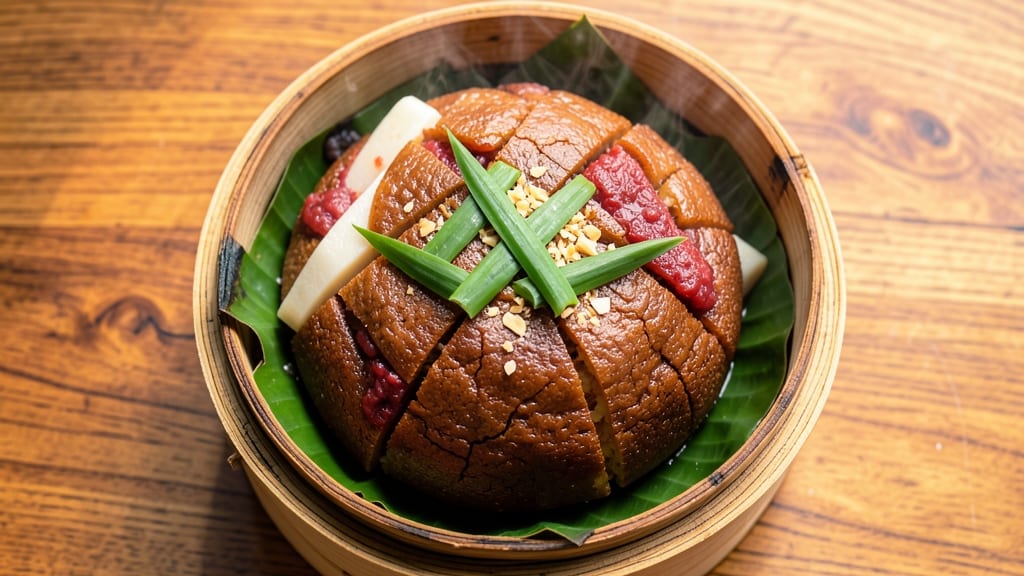
This Vietnamese steamed rice cake recipe brings the essence of Tet celebrations to your kitchen with its delicate layers of fragrant pandan and coconut.
The process begins with soaking glutinous rice flour until it reaches the perfect consistency—neither too sticky nor too dry—so it steams into a tender, slightly chewy cake with a subtle floral aroma.
What makes this recipe special is the balance between tradition and simplicity, allowing you to create an authentic dessert without specialized equipment.
The key to success lies in the preparation: mixing the rice flour with coconut milk and pandan extract creates a fragrant base that infuses the cake with natural sweetness.
Shaping the mixture into rectangular layers ensures even steaming, while optional fillings like mung bean paste or tofu add texture and depth. This method delivers restaurant-quality results at home, with a texture that’s both light and satisfying.
By the time you remove the steamed cake from the bamboo mat, you’ll have a beautifully layered dessert with a delicate floral scent and a tender, slightly chewy bite. The pandan and coconut flavors meld together harmoniously, creating a dish that’s as visually appealing as it is delicious.
Perfect for holidays, gatherings, or as a special treat, this recipe captures the heart of Vietnamese cuisine in every bite.
While traditional versions often include pork or shrimp, this vegetarian-friendly adaptation maintains the same rich flavors and cultural significance. Whether you’re celebrating Tet or simply craving a taste of Vietnam, this recipe delivers an authentic experience with minimal effort. Let’s get started on creating your own fragrant masterpiece.
Ingredients for vietnamese steamed rice cake
Fragrant coconut and pandan bring Tet flavors to your kitchen with just 11 simple ingredients.
| Ingredient | Amount | Notes |
|---|---|---|
| Glutinous Rice Flour 🍚 | 2 cups | Also called sweet rice flour |
| Coconut Milk 🥥 | 1 ½ cups | Full-fat, canned preferred |
| Pandan Extract 🌿 | 1 tbsp | Pure, not paste |
| Granulated Sugar 🍚 | ½ cup | White or brown sugar |
| Water 💧 | 1 ½ cups | Room temperature preferred |
| Silken Tofu 🍫 | 7 oz | Soft, for optional filling |
| Mung Bean Paste 🌱 | ½ cup | Red bean paste optional |
| Vegetable Oil 🫒 | 1 tbsp | For greasing bamboo mat |
| Salt 🧂 | ¼ tsp | Fine sea salt |
| Bamboo Steaming Mat 🏺 | 1 whole | Or parchment paper |
| Pandan Leaves 🌿 | 2 whole | For wrapping, optional |
Pandan extract is the secret weapon here—Gourmet Garden or Asian markets carry the best quality. Look for pure extract, not paste, which can be watery. The glutinous rice flour should be labeled as sweet rice flour; Bob's Red Mill is reliable if you can't find it at an Asian grocery. For coconut milk, grab the full-fat canned version—Thai Kitchen brand is widely available and works perfectly. If you're using mung bean paste, red bean paste adds that classic Tet flavor, but plain mung bean works too.
No pandan extract? Vanilla extract at half the amount gives a different but still lovely floral note. Running low on glutinous rice flour? Substitute with regular rice flour plus 1 extra tbsp water, but texture won't be identical. Silken tofu can be swapped for soft tofu or extra coconut milk if you're not using it as a filling. The bamboo mat is key for texture—parchment paper works in a pinch, but it won't give that signature chewy bottom. And if you can't find fresh pandan leaves, skip them or use a few drops of extract instead.
This keeps beautifully wrapped in plastic for 3 days in the fridge, or 1 month frozen. I like to slice it before freezing for easy portions. The texture actually improves after steaming—it softens just right. For serving, dust with powdered sugar or drizzle with extra coconut milk. Leftovers reheat perfectly in the microwave with a damp paper towel for 20 seconds—just until warm.
Why You'll Love This Recipe
- No Fuss, One Bowl: I swear by this recipe—just mix, steam, and you’re done. The glutinous rice flour handles all the heavy lifting, so no kneading or fussing required. Honestly, the hardest part is waiting for it to set.
- Coconut-Pandan Magic: That first bite? Pure comfort. The coconut milk makes it creamy without being heavy, while the pandan extract adds this floral, vanilla-like warmth that’s oddly addictive. It’s the kind of flavor that makes you pause mid-chew.
- Steam-and-Go Meal Prep: Between us, this is my go-to for potlucks or lazy Sundays. Bake a batch, slice them up, and they keep for days in the fridge—perfect for quick breakfasts or snacks. (Yes, even on a Tuesday night.)
- Budget Sweetness: Glutinous rice flour and sugar are cheap, and coconut milk stretches far. I make a big batch for the week, and it’s always gone before I can blink. Not the prettiest, but the taste makes up for it every time.
Step-by-step instructions for Vietnamese steamed rice cake
Here's how to create these fragrant, layered rice cakes with perfect texture every time.
Prepare the Batter Mixture
In a large mixing bowl, combine the 2 cups glutinous rice flour, 1.5 cups coconut milk, 1 tbsp pandan extract, and 0.5 cup granulated sugar. Mix until smooth—you want a thick, lump-free batter that coats the back of a spoon. Here's the thing—this mixture needs to be perfectly balanced. If it's too thick, add 1 tablespoon of the 1.5 cups water at a time until it reaches a pudding-like consistency.
Next, fold in the 7 oz silken tofu (crumbled if needed) and 0.5 cup mung bean paste. The tofu adds a delicate texture while the mung bean paste gives that classic sweet-savory depth. Mix gently to avoid deflating any air bubbles—this keeps the cakes light. Cover the bowl with plastic wrap and let it rest for 30 minutes at room temperature. This resting period helps the flavors meld and makes the batter easier to work with later.
Assemble the Layered Cakes
Lightly grease the bamboo steaming mat with 1 tbsp vegetable oil, then spread a thin layer of the batter to cover the entire surface. Place the mat on a plate or tray. Now, here's where it gets fun—take one of the 2 whole pandan leaves and place it in the center of the mat. The pandan leaf will infuse its signature aroma into the cake as it steams.
Spread another thin layer of batter over the pandan leaf, then add a small amount of the mung bean paste mixture in the center. Top with another layer of batter, then carefully fold the mat's edges inward to create a neat package. The goal is to trap all the filling inside while keeping the outer layer smooth. Repeat with the second pandan leaf to make the second cake.
Steam to Perfection
Set up your steamer with about 1 inch of water in the bottom. Bring the water to a rolling boil, then reduce heat to medium-high until the water is steaming steadily. Place the wrapped cakes in the steamer basket, making sure they don't touch each other. Steam for 45-50 minutes until the cakes are firm to the touch and the edges pull away slightly from the mat.
Here's the critical part: don't open the lid during steaming. The trapped steam creates that signature moist texture. You'll know they're done when the cakes develop a slight sheen and feel springy when pressed gently. If you're using a bamboo mat, you can carefully peel back a corner to check—it should look golden and set. Let the cakes cool in the steamer for 10 minutes before unwrapping. This gradual cooling prevents them from falling apart when you remove them.
Serve Warm with Optional Garnishes
Once cooled, carefully unwrap the cakes and slice into ½-inch thick pieces. The texture should be soft and slightly chewy with a delicate pandan aroma. Serve warm with a sprinkle of 0.25 tsp salt if desired, or drizzle with a little extra coconut milk for richness. These cakes pair beautifully with strong coffee or as a sweet snack on their own.
Real talk: if the cakes feel too dense, your batter was likely too thick. Next time, add a splash more water during mixing. If they're too soft, they may not have steamed long enough. The key is that perfect balance between firm and tender. Enjoy your homemade Vietnamese rice cakes—they're worth every layer of effort!
Pro Tips For Making Vietnamese Steamed Rice Cake
- STEAM AT 180°F: I learned this the hard way—steaming too hot (200°F+) makes the cakes gummy inside while the outside dries out. Use a thermometer to nail 180°F, and let the steam work for 45–60 minutes. The cakes will set evenly without turning into glue.
- SIFT THE FLOUR FIRST: Glutinous rice flour clumps like crazy, and those lumps turn into dry spots in your cakes. Sift it twice—once before mixing, once after adding coconut milk—so the batter stays silky. No sifting? At least whisk it like you’re angry at it.
- DON’T SKIP THE REST: After mixing, let the batter sit covered for 30 minutes. I know, you’re eager to steam, but this lets the pandan and sugar meld. Skipping it? Your cakes will taste like flour and regret. (Yes, even if you’re impatient like me.)
- USE FULL-FAT COCONUT MILK: The cheap, watered-down stuff makes the cakes dense and bland. Splurge on the canned full-fat version—it adds richness and helps the texture stay tender. If you’re fresh out, reduce the water in the batter by 2 tablespoons to compensate.
Serving suggestions for this vietnamese steamed rice cake
Traditional Tet Presentation
These fragrant rice cakes are traditionally served during Tet, Vietnam’s Lunar New Year, where they symbolize prosperity and good fortune. Arrange the sliced cakes on a banh chưng (square bamboo tray) with pandan leaves for an authentic presentation.
Add red and gold decorations—like paper cuttings or small lanterns—to honor the holiday spirit. 🌿
Coffee Pairings
Vietnamese egg coffee or drip coffee (ca phe sua da) cuts through the sweetness beautifully. The bold, creamy notes complement the pandan’s floral aroma while balancing the coconut’s richness.
For a modern twist, try matcha latte—its earthy bitterness contrasts the cake’s sweetness. Serve in small cups to mimic Vietnamese cafés.
Fruit Accompaniments
Add mango slices or dragon fruit for a refreshing contrast—their juiciness balances the chewy texture. A sprinkle of toasted coconut flakes adds crunch, while lychee jelly introduces a burst of tangy sweetness. I like arranging fruit in a circular pattern around the cake for a visually stunning plate. 🍍
Savory Contrast
For a unique twist, serve with grilled lemongrass shrimp or pickled vegetables to highlight the cake’s sweetness. The acidity of pickled carrots or daikon cleanses the palate, while the shrimp’s smokiness adds depth. This fusion approach mirrors modern Vietnamese café culture.
Gift-Worthy Packaging
Wrap leftover slices in parchment paper, tie with a red ribbon, and gift them in small boxes. Include a handwritten note about the recipe’s cultural significance—this makes them a memorable Tet gift. For extra flair, dust with powdered sugar or drizzle with coconut syrup before packaging. 💛
Nutrition facts
Frequently asked questions
Can I make this recipe without a bamboo steaming mat?
Use parchment paper instead—just lightly grease it with oil first. The texture won't be identical (you'll lose that signature chewy bottom), but it still works well for beginners. For a closer match, try wrapping the batter in banana leaves if available—they infuse subtle flavors too.
Why does my batter turn out too sticky or too dry?
Too sticky? You likely need 1-2 extra tablespoons of water—mix gradually until it reaches a pudding-like consistency. Too dry? Add 1 tablespoon of coconut milk at a time. The key is a smooth batter that coats the back of a spoon but isn't runny. Let it rest 30 minutes after mixing to adjust naturally.
How do I store these cakes for Tet celebrations?
Wrap tightly in plastic wrap and store in the fridge for 3 days or freeze for 1 month. For serving, microwave slices for 20 seconds with a damp paper towel to restore moisture. Pro tip: Slice before freezing for easy portions. The texture actually improves slightly after steaming—just reheat gently!
What's the difference between this and traditional Bánh Tét?
This vegetarian version skips the traditional pork filling but keeps the same layered technique. Authentic Bánh Tét uses pork shoulder and fatty pork skin wrapped in banana leaves, while this recipe focuses on coconut-pandan layers with mung bean paste. Both are steamed in cylindrical shapes, but our rectangular version is easier for home cooks.
Can I substitute pandan extract with something else?
Yes! Use ½ tsp vanilla extract for a different floral note, or try 1 tsp lemon zest for citrus brightness. For a more authentic pandan flavor, blend fresh pandan leaves with water (1 cup leaves + ½ cup water) and strain. The extract is just a shortcut—fresh leaves give the deepest aroma.