
Side Dishes
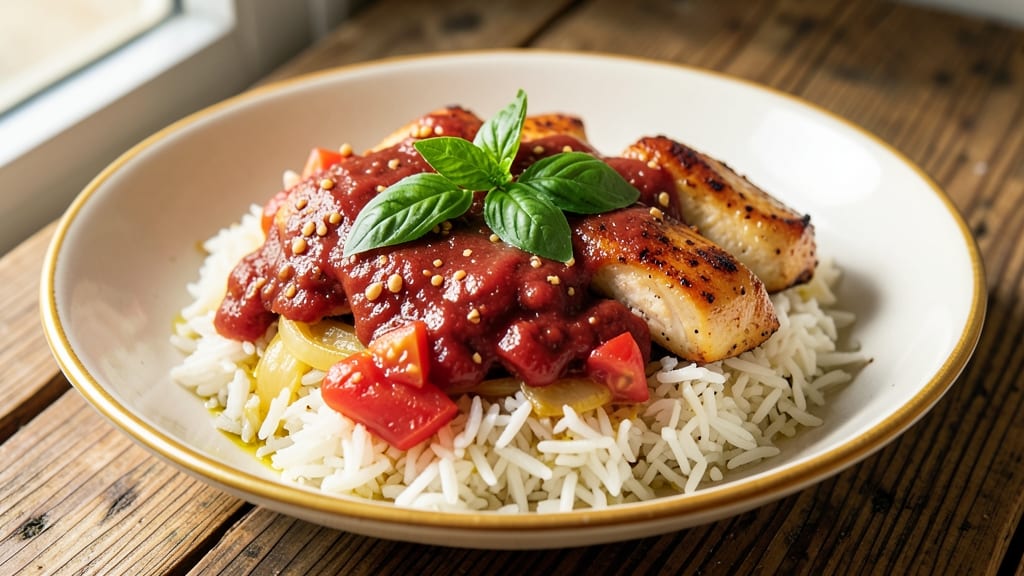
This West African rice recipe transforms simple grains into a vibrant, flavor-packed centerpiece that carries the soul of West African cuisine. The marriage of tomato-basil fragrance with peanut butter depth creates a dish that's both comforting and complex—perfect for feeding a crowd or a special weekend meal.
I developed this version after years of perfecting the balance between smoky spices, rich peanut sauce, and perfectly fluffy rice.
The secret lies in layering flavors through slow-cooked tomato paste and aromatic spices, then finishing with a creamy peanut butter base that ties everything together.
This isn't just rice—it's a complete meal with protein (traditionally chicken or fish, but easily adapted for tofu or beans) and vegetables all cooked in one flavorful pot. The technique ensures tender rice with distinct grains while maintaining that signature West African richness.
What you'll end up with is a dish that's fragrant enough to fill your home with warmth, visually stunning with its golden-red hue, and packed with layers of flavor that keep every bite interesting.
The peanut butter adds a subtle creaminess that balances the acidity of the tomato sauce, while fresh basil at the end brings brightness. This is the kind of recipe that gets better with leftovers and becomes a family favorite.
Serve with fried plantains, coleslaw, or grilled vegetables to complete the meal. Whether you're cooking for a celebration or a weeknight dinner, this West African rice delivers restaurant-quality results with professional techniques simplified for home cooks. Let's get started on creating this flavorful masterpiece.
Ingredients for west african rice
Sixteen ingredients that come together for a fragrant, vibrant West African masterpiece.
| Ingredient | Amount | Notes |
|---|---|---|
| Long-Grain White Rice 🍚 | 2 cups | Uncooked, jasmine or basmati preferred |
| Natural Peanut Butter 🥜 | ½ cup | Creamy, unsweetened variety |
| Tomato Paste 🍅 | ¼ cup | Squeeze tube preferred for freshness |
| Fresh Basil Leaves 🌿 | ½ cup | Packed, stems removed |
| Canned Diced Tomatoes 🍅 | 14 ½ oz | Fire-roasted for deeper flavor |
| Chicken Breast 🍗 | 1 ½ lb | Boneless, skinless, cubed |
| Yellow Onion 🧅 | 1 whole | Medium, diced |
| Garlic Cloves 🧄 | 6 cloves | Minced for aromatic base |
| Vegetable Oil 🫒 | ¼ cup | Light, for sautéing |
| Ground Ginger 🌿 | 1 tsp | Freshly grated preferred |
| Ground Nutmeg 🌿 | ½ tsp | Freshly grated preferred |
| Dried Thyme 🍃 | 1 tsp | Or 1 tbsp fresh |
| Smoked Paprika 🌶️ | 1 tbsp | For smoky depth |
| Salt 🧂 | 1 ½ tsp | Diamond Crystal preferred |
| Black Pepper 🌶️ | ½ tsp | Freshly ground |
The peanut butter and tomato paste are the flavor anchors here. Jif Natural Creamy or Skippy Natural are my go-tos for peanut butter—the no-sugar-added versions keep the focus on pure peanut flavor. For tomato paste, Muir Glen or Rao's are the gold standards, but any quality squeeze tube works. The rice matters too—jasmine or basmati stays distinct and fluffy. If you're using canned tomatoes, fire-roasted varieties add that smoky depth without extra work. The chicken should be skinless, boneless breast—thighs work but can make the dish too rich. Buy it pre-cubed to save time, or ask your butcher to cut it for you.
No peanut butter? Substitute with 0.25 cup powdered peanut butter (like PB2) plus 0.25 cup water for the same texture. Fresh ginger and nutmeg are ideal, but ground versions work at half the amount. Short on fresh basil? Dried basil at one-third the amount gets you close. The smoked paprika is non-negotiable for that West African smokiness—Penzeys or Trader Joe's carry great options. For a vegetarian version, swap chicken for firm tofu or chickpeas. The canned tomatoes can be omitted entirely if you prefer a thicker sauce—just reduce the liquid after adding the paste.
This dish tastes even better the next day as flavors meld. Store leftovers in an airtight container for up to 5 days in the fridge, or freeze for 3 months. I like to portion mine into single-serving containers for easy lunches. The peanut butter sauce thickens when chilled, so add a splash of water or broth when reheating. Fresh basil should be added right before serving—it wilts fast when cooked. For extra richness, stir in 1 tbsp coconut milk when reheating.
Why You'll Love This Recipe
- I’ll be real: this recipe won’t break the bank. Canned tomatoes, peanut butter, and rice? That’s it. Plus, the leftovers taste just as good the third day as they did the first—proof it’s both budget-friendly and reliable.
- One-Pot Magic: I swear by this recipe because it’s literally one pot—no fancy gadgets, no extra bowls. The peanut butter and tomato paste blend into a rich sauce while the rice cooks, and honestly? That’s my kind of effortless.
- Nutty, Tangy, Perfect: The peanut butter isn’t just for flavor—it’s the star. It gives this rice a deep, creamy richness that balances the bright acidity of the tomatoes, while fresh basil adds that bright, herby finish. (Yes, even on a Tuesday night.)
- Lunchbox Hero: Between us, this rice stays for days. Pack it in containers for work lunches—it reheats beautifully, and the peanut butter keeps it from drying out. My kids grab it straight from the fridge, no complaints.
Step-by-step instructions for West African rice
Here's the method that balances rich peanut butter depth with bright tomato-basil fragrance.
Sauté the Aromatic Base
Heat the 0.25 cup vegetable oil in a large, heavy-bottomed pot over medium heat. Add the 1 whole yellow onion and cook for 5-6 minutes until softened and translucent, stirring occasionally. This foundational step develops sweetness that carries through the entire dish.
Add the 6 cloves garlic cloves and cook for 30 seconds until fragrant—you'll know it's ready when the kitchen fills with that unmistakable garlic aroma. Immediately stir in the 1 tbsp smoked paprika and 1 tsp dried thyme, letting the spices toast for 1 minute until their essential oils are released. This is where the dish's signature smoky depth begins to develop.
Build the Tomato-Peanut Sauce
Reduce heat to medium-low and add the 0.25 cup tomato paste, stirring constantly to prevent burning. Cook for 3-4 minutes until the paste darkens slightly and loses its raw taste. Here's where it gets interesting—pour in the 14.5 oz canned diced tomatoes and 0.5 cup fresh basil leaves, then stir in the 0.5 cup natural peanut butter. The peanut butter will initially look like it's separating, but keep stirring—it will eventually emulsify into a velvety sauce.
Add the 1 tsp ground ginger, 0.5 tsp ground nutmeg, 1.5 tsp salt, and 0.5 tsp black pepper, mixing well to distribute all flavors evenly. Let the sauce simmer for 5 minutes until it thickens slightly and the peanut butter fully incorporates. This is the moment that matters: the peanut butter should create a rich, creamy texture that coats the back of a spoon without being overly thick.
Cook the Chicken Until Tender
Increase heat to medium-high and add the 1.5 lb chicken breast, cut into 1-inch cubes. Cook for 6-8 minutes, stirring occasionally, until the chicken is no longer pink in the center and the edges are lightly browned. The peanut butter sauce will help keep the chicken moist while adding its signature richness. Remove the chicken with a slotted spoon and set aside on a plate.
Real talk: don't skip this step of removing the chicken early. If you leave it in the sauce too long, the chicken will overcook and turn rubbery. The sauce will continue cooking while you prepare the rice, so timing is everything here.
Perfect the Rice Texture
Rinse the 2 cups long-grain white rice under cold water until the water runs clear, then add it to the pot with the peanut butter-tomato mixture. Stir gently to distribute the rice evenly, then add 2 cups water. This ratio ensures perfectly fluffy rice that absorbs all the flavorful sauce.
Bring to a boil, then reduce heat to low, cover tightly with a lid, and simmer for 20 minutes. Here's the thing—don't peek or stir during this time. The rice needs undisturbed cooking to develop its signature texture. After 20 minutes, check the rice: it should be tender but still slightly firm in the center.
Finish and Rest Together
Return the chicken to the pot and stir gently to combine. Increase heat to medium-low and let everything cook together for 5 more minutes so the chicken can reabsorb some of the sauce. The rice should now be fully tender with a slight bite—this is the perfect texture for West African rice.
Remove from heat and let the entire dish rest, covered, for 10 minutes. This resting period allows the flavors to meld completely and the rice to absorb any remaining liquid. The result should be a harmonious blend where each bite delivers tender chicken, creamy peanut butter sauce, and fragrant tomato-basil rice—all perfectly balanced.
Pro Tips For Making West African Rice
- Bloom the Tomato Paste: Heat your oil until it shimmers, then add the tomato paste before any aromatics—this prevents burning and lets the flavors melt into the sauce properly. I learned this the hard way after scraping burnt bits off my pot for the third time.
- Toast the Peanut Butter: Stir in the peanut butter after the sauce has simmered for 10 minutes—this lets the peanut oil bloom and adds richness without curdling. Skip this, and you’ll just end up with a greasy, unbalanced mess.
- Rinse the Rice Twice: Cold-water rinse both before and after soaking (15 minutes max) removes excess starch and keeps the grains separate. I used to skip the second rinse, and my rice always turned gluey—now it’s light and fluffy.
- Simmer Low and Slow: Once the rice is added, drop the heat to lowest possible and let it steam uncovered for 20 minutes. High heat here = mushy rice. Trust me, your future self will notice the difference.
Common mistakes when making great west african rice
Skipping the Resting Step
This is the most common mistake I see—rushing the final 10-minute rest after cooking. The rice needs this time to absorb all the flavorful liquid and develop its signature texture. If you skip it, you'll end up with dry, separate grains instead of the cohesive, fragrant dish you're aiming for.
I've learned this the hard way—my first attempt turned out like a sad rice salad. 💫
Overcooking the Chicken
Leaving the chicken in the sauce too long after it's cooked through is a recipe for disaster. Once the chicken reaches 165°F internal temperature, remove it immediately. If you let it sit in the sauce beyond 6-8 minutes of cooking, it'll turn rubbery and dry out.
The peanut butter sauce will continue cooking while you prepare the rice, so trust the timing—don't overcomplicate it.
Burning the Tomato Paste
Tomato paste is delicate and burns quickly when exposed to high heat. When adding the 0.25 cup tomato paste, keep the heat at medium-low and stir constantly for those 3-4 minutes.
I've seen many cooks rush this step, resulting in a bitter, burnt flavor that ruins the entire dish. Patience here is key—don't walk away from the pot!
Using Low-Quality Peanut Butter
Not all peanut butters are created equal. Using sweetened or low-fat varieties will compromise the dish's richness and depth. Stick with natural, unsweetened creamy peanut butter like Jif Natural Creamy or Skippy Natural.
The high fat content is essential for creating that velvety sauce. I've tried cheaper brands, and the difference is noticeable—trust me, it's worth investing in quality here. 🥜
Ignoring the Rice Rinse
Skipping the step of rinsing the 2 cups long-grain white rice under cold water removes a crucial layer of starch that can make the rice gummy. Rinse until the water runs clear—this ensures each grain stays distinct and absorbs the flavorful sauce properly.
I've made this mistake and ended up with a mushy, unappetizing texture that didn't hold up to the rich peanut butter sauce.
Underestimating the Peanut Butter Emulsification
When you add the 0.5 cup natural peanut butter to the sauce, it might look like it's separating, but don't give up! Keep stirring vigorously for at least 2-3 minutes until it fully emulsifies into a smooth, creamy texture.
I've seen many cooks assume it won't work and end up with a lumpy, unappetizing sauce. The key is patience and persistence—it will come together! 💡
Nutrition facts
Frequently asked questions
What makes West African rice different from regular rice dishes?
This dish stands out with its rich peanut butter-tomato sauce base and aromatic spices like smoked paprika and nutmeg. Unlike basic rice, it incorporates tender protein (chicken, fish, or tofu) cooked directly in the flavorful sauce, creating a complete one-pot meal. The secret lies in balancing creamy peanut butter with bright tomato-basil notes and achieving perfectly fluffy, separate grains.
Can I make this West African rice vegetarian or vegan?
Swap the chicken for 1.5 lbs firm tofu (pressed and cubed) or 2 cans chickpeas (drained). For extra protein, add 1 cup lentils cooked separately. Use vegetable broth instead of chicken broth, and ensure your peanut butter is vegan-certified if needed. The dish will still be packed with flavor and texture.
How do I know when the rice is perfectly cooked?
After 20 minutes of simmering, the rice should be tender but still have a slight bite in the center. The grains should be distinct and fluffy, not mushy. If you're unsure, taste a grain—it should be fully cooked but not overdone. The resting period (covered for 10 minutes) helps the rice absorb all the flavorful sauce for that signature West African texture.
What sides pair best with this West African rice?
This dish works beautifully with crispy fried plantains, cooling coleslaw, or grilled vegetables. For a complete meal, add a simple green salad with lime dressing or roasted sweet potatoes. The peanut butter-tomato richness pairs well with lighter, fresh flavors that cut through the richness. Many West African meals also include a side of spicy shito (black pepper sauce) for extra heat.
Can I prepare this dish ahead of time?
Yes! This rice tastes even better the next day as flavors meld. Store leftovers in an airtight container for up to 5 days in the fridge. For reheating, add a splash of water or broth to restore moisture. The peanut butter sauce thickens when chilled, so stir gently when reheating. Freeze portions for up to 3 months—just thaw overnight in the refrigerator before reheating.