
Sauces & Condiments
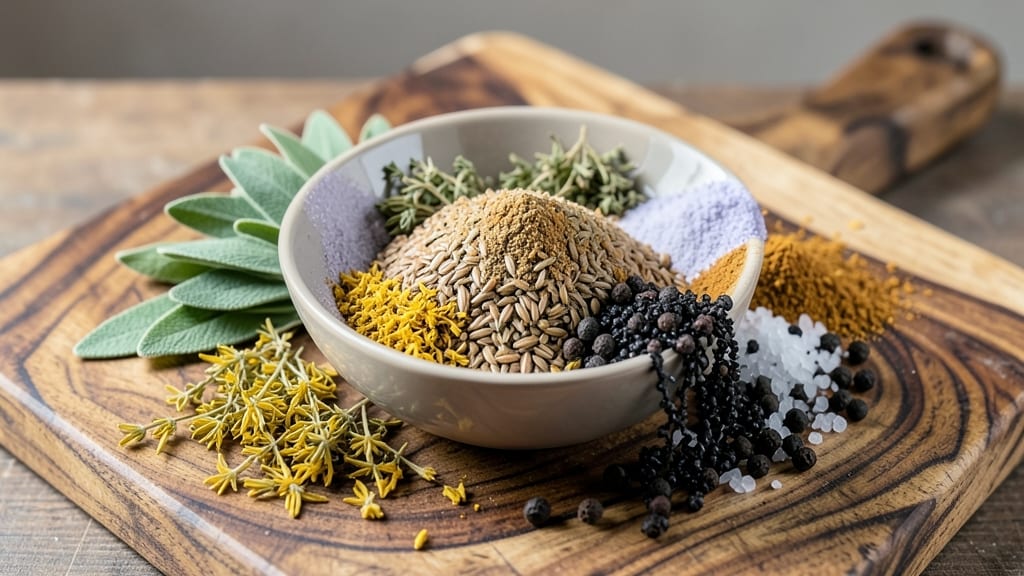
Creating the perfect wild rice seasoning packet transforms ordinary rice into a savory masterpiece for pilafs and beyond. This dry herb blend combines earthy sage, aromatic thyme, and subtle onion powder to elevate every grain—no guesswork, just restaurant-quality flavor in a pinch.
The blend works seamlessly with both traditional and modern dishes, making it a kitchen essential.
With just two tablespoons of this mix, you’ll achieve a rich, balanced flavor profile that pairs beautifully with wild rice’s natural nuttiness. Use it for pilafs, salads, or even as a seasoning for roasted vegetables.
The recipe is simple yet precise, ensuring every batch delivers consistent, professional results. Let’s get started on your flavor-packed seasoning blend.
Ingredients for wild rice seasoning packet
Nine simple spices transform bland rice into restaurant-quality pilafs with just two tablespoons.
| Ingredient | Amount | Notes |
|---|---|---|
| Dried Sage Leaves 🌿 | 1 ½ tbsp | Culinary-grade, not decorative |
| Dried Thyme Leaves 🌿 | 1 tbsp | French or English preferred |
| Onion Powder 🧅 | 1 tsp | Finely ground, not salted |
| Garlic Powder 🧄 | 1 tsp | Freshly ground preferred |
| Ground Black Pepper 🌶️ | ½ tsp | Freshly cracked preferred |
| Diamond Crystal Kosher Salt 🧂 | 1 tsp | Fine grain preferred |
| Smoked Paprika 🌶️ | ½ tsp | For subtle smokiness |
| Ground Nutmeg 🌿 | ¼ tsp | Freshly grated preferred |
| Ground Ginger 🌶️ | ¼ tsp | Freshly ground preferred |
| Dried Parsley Flakes 🌿 | ½ tsp | For fresh brightness |
The herbs are the heart of this blend. Penzeys or Spicewalla carry the best dried varieties—look for vibrant color and a recent harvest date. Sage should be deep green, thyme a rich brown, and parsley flakes bright green (none of that dull yellow stuff). The nutmeg and ginger are non-negotiable for depth, so buy them whole and grind fresh if possible. For the paprika, smoked is essential—it adds that subtle campfire note that makes pilafs taste gourmet. Store all spices in airtight containers away from light, or they’ll lose their punch in weeks.
No smoked paprika? Regular paprika plus a pinch of liquid smoke works in a pinch. Short on parsley? Dried oregano at half the amount keeps things earthy. The nutmeg and ginger can be swapped for allspice at half the quantity if you’re out, but you’ll lose that warm, cozy depth. For a vegetarian-friendly version, bump the parsley to 1 tsp and add 0.25 tsp dried marjoram. The blend works beautifully with brown rice too—just double the amount since it’s nuttier. And if you’re using this for roasted veggies, add an extra 0.25 tsp garlic powder for extra punch.
This blend keeps for up to 6 months in a sealed container, but it’s best used within 3 months for peak flavor. I make a triple batch and store it in amber glass jars from Trader Joe’s—they’re cheap and block light perfectly. Portion into small jars or silicon spice bags for easy single-use servings. Freeze extras if you won’t use them within the month—just let them come to room temp before opening to avoid moisture buildup. Trust me, you’ll reach for this before the store-bought packets every time.
Why You'll Love This Recipe
- I use this on everything: roasted veggies, grilled chicken, even scrambled eggs. The dried herbs last forever, and the mix is cheap enough that I don’t stress about wasting it. (Yes, even on a Tuesday night.)
- No-Measure Guessing: I keep this mix in a jar by the stove—just eyeball a teaspoon per pound of rice. The sage and thyme blend so well, you won’t miss measuring cups. Honestly, I’ve made it wrong three times and still ended up with flavor.
- Savory Umami Bomb: That garlic powder and onion combo? It’s like a little flavor explosion when you stir it into hot rice. The black pepper gives it a subtle kick, but the herbs keep it warm and earthy—not too heavy, not too sharp.
- Pantry Staple Magic: I use this on everything: roasted veggies, grilled chicken, even scrambled eggs. The dried herbs last forever, and the mix is cheap enough that I don’t stress about wasting it. (Yes, even on a Tuesday night.)
Step-by-step instructions for wild rice seasoning blend
Here's how to mix this aromatic blend that transforms wild rice into restaurant-quality pilaf every time.
Measure All Ingredients Precisely
Start by gathering all your ingredients and measuring them with exact precision. I use a small digital scale for the spices—it's the only way to guarantee those tiny measurements like the 0.25 tsp ground nutmeg and 0.25 tsp ground ginger are accurate. The difference between 0.5 tsp and 1 tsp smoked paprika can completely change the flavor profile of your rice.
For the dried herbs, use a clean, dry tablespoon measure. The 1.5 tbsp dried sage leaves and 1 tbsp dried thyme leaves should be measured by gently spooning them into the measure and leveling with a knife. Don't pack them down—this compresses the herbs and alters the ratio. Place each measured ingredient in its own small bowl to keep your workspace organized.
Combine Dry Ingredients Thoroughly
In a medium mixing bowl, add the 1.5 tbsp dried sage leaves and 1 tbsp dried thyme leaves first. These are your base herbs that will carry the primary flavor. Use a fork or small whisk to break up any herb clumps—you want these to disperse evenly throughout the blend. The dried herbs should be completely free of any large pieces that might create flavor hotspots in your rice.
Next, add the remaining dry ingredients: 1 tsp onion powder, 1 tsp garlic powder, 0.5 tsp ground black pepper, 1 tsp diamond crystal kosher salt, 0.5 tsp smoked paprika, 0.25 tsp ground nutmeg, 0.25 tsp ground ginger, and 0.5 tsp dried parsley flakes. Here's where the magic happens—each of these ingredients plays a specific role. The nutmeg and ginger add warmth, the smoked paprika brings depth, and the parsley flakes contribute fresh brightness that cuts through the richness of the rice.
Mix Until Uniformly Distributed
Using a small whisk or clean hands, thoroughly combine all ingredients. I like to use my hands for this step—it gives me better control over the texture and helps me feel when the blend is truly uniform. Work the spices between your fingers to break down any remaining clumps and ensure the dried parsley flakes are evenly distributed. You should be able to pick up a pinch of the mixture and see all the different colors—this visual check confirms proper blending.
For best results, mix for about 2-3 minutes until the blend looks homogeneous and smells uniformly aromatic. The final texture should be fine and powdery with no visible herb stems or large spice particles. This thorough mixing ensures every grain of wild rice gets the same flavor treatment, creating that perfect balance of savory, smoky, and herbal notes in your pilaf.
Store Properly for Maximum Flavor
Transfer your finished seasoning blend to an airtight container with a tight-sealing lid. I prefer small glass jars with silicone seals—they preserve flavor better than plastic and allow me to see the contents at a glance. The blend should be stored in a cool, dark place like your pantry, where it will maintain its freshness and potency for up to 6 months. If you notice the aroma becoming dull or the herbs losing their color, it's time to make a fresh batch.
When using this blend, measure out what you need for each recipe—typically about 1 tablespoon per cup of uncooked wild rice. The blend is concentrated, so a little goes a long way. For best results, toast the seasoning blend in a dry skillet for 30 seconds before adding it to your rice—this awakens the aromatic oils and creates that professional restaurant quality you're after.
Pro Tips For Making Wild Rice Seasoning Packet
- TOAST THE HERBS FIRST: Dried sage and thyme taste flat if they’re just tossed in raw—give them 30 seconds in a dry skillet over medium heat until fragrant. The aroma jumps out of the pan like a wake-up call, and it prevents that dusty, medicinal aftertaste. (Yes, even if you’re impatient like me.)
- GRIND THE POWDERS FRESH: Store-bought onion and garlic powder lose punch fast—if you’ve had yours longer than 3 months, pulse them in a spice grinder for 10 seconds. The fresh grind makes a real difference, especially when mixed with the delicate herbs. I learned this the hard way after a bland batch ruined my holiday casserole.
- WEIGH THE BLACK PEPPER: Sprinkling pepper by volume is a guessing game—use a scale for ¼ teaspoon per packet. Too much overpowers the earthy herbs, while too little leaves it tasting like a sad salad. (Your future self will thank you.)
- STORE IN AIRLESS CONTAINER: After mixing, press the seasoning into a small jar and seal it tight—moisture turns the powders clumpy in days. I skip this and end up with a brick of seasoning that won’t disperse evenly. Takes 2 minutes but saves hours of frustration later.
Pro cooking tips for this dish
Toast for Depth
Before adding your seasoning blend to wild rice, toast it in a dry skillet over medium heat for 30 seconds. This simple step awakens the aromatic oils in the spices, intensifying their flavors and creating that professional restaurant-quality depth.
I like to use a 10-inch cast-iron skillet because it distributes heat evenly and prevents burning. Watch closely—the blend should smell rich and complex, not burnt. 🌶️
Layering Flavors
For even more complexity, divide your seasoning blend into two portions. Toast half as directed, then add the remaining 1 tablespoon directly to your cooked rice. This creates a flavor gradient where some grains get the full toasted experience while others maintain a more subtle seasoning.
I often use this technique for holiday pilafs where I want visual and flavor contrast in every bite.
Rice Cooker Hack
If you're using a rice cooker, add your seasoning blend to the uncooked rice along with the water. The steam will infuse every grain evenly, creating a perfectly seasoned pilaf with minimal effort.
For best results, use 2 tablespoons of the blend per cup of rice since the enclosed environment concentrates the flavors. I recommend the Zojirushi NS-LAC10 model—it's my go-to for consistently perfect rice.
Vegetarian Boost
For vegetarian dishes, add 0.25 teaspoon dried marjoram to your blend and increase the parsley flakes to 1 teaspoon. The marjoram adds a citrusy brightness that complements vegetable-based pilafs beautifully.
I also recommend adding a pinch of turmeric for color—just 0.125 teaspoon gives the rice that golden hue without overpowering the flavor. 🌿
Storage Secrets
Store your seasoning blend in amber glass jars with airtight lids to preserve freshness. I keep mine in the pantry, but for long-term storage (beyond 3 months), transfer to the freezer. When using frozen blend, let it sit at room temperature for 10 minutes before opening to prevent moisture condensation.
For single-use portions, divide into small silicon spice bags—they're perfect for measuring out 1 tablespoon servings without mess.
Flavor Troubleshooting
If your seasoned rice tastes bland, your blend may have lost potency. Freshly ground spices make all the difference—always use freshly ground nutmeg and ginger for maximum impact. For extra richness, add 1 teaspoon chicken bouillon powder to your blend (reduce salt by 0.25 teaspoon).
If it tastes too salty, balance with 0.5 teaspoon lemon zest—the acidity cuts through the saltiness beautifully. 💡
Nutrition facts
Frequently asked questions
Can I make this seasoning blend without fresh herbs?
This recipe uses only dried herbs and spices for convenience and long shelf life. The dried sage, thyme, and parsley flakes work perfectly to create that rich, aromatic flavor. For best results, choose high-quality dried herbs from reputable brands like Penzeys or Spicewalla, as they retain more potency than generic store brands.
How much seasoning should I use for different rice quantities?
For 1 cup of uncooked wild rice, use 1 tablespoon of the blend. If using a rice cooker, increase to 2 tablespoons since the enclosed environment concentrates flavors. For larger batches (like 4 cups of rice), use 1.5 tablespoons—this ensures even distribution without overpowering the dish.
What if I don’t have smoked paprika?
No problem! Replace it with 0.5 teaspoon regular paprika plus a tiny pinch (1/8 teaspoon) of liquid smoke for that campfire depth. If you’re completely without paprika, add 0.25 teaspoon extra garlic powder and 0.25 teaspoon onion powder to compensate for the missing smokiness. The blend will still taste delicious, just with a slightly different profile.
Can I use this blend for other grains besides wild rice?
Yes! This versatile seasoning works beautifully with brown rice, quinoa, or farro. For heartier grains like quinoa, use 1.5 tablespoons per cup since they absorb flavors differently. It also pairs well with roasted vegetables or as a seasoning for stuffing mixes. The key is to adjust the amount based on the grain’s texture and moisture content.
Why does my seasoned rice taste bland?
Bland flavor usually means your spices lost potency. Always use freshly ground nutmeg and ginger, and store your blend in an airtight container away from light. For extra richness, toast the blend in a dry skillet for 30 seconds before adding it to the rice. If it’s still bland, add 1 teaspoon chicken bouillon powder (reduce salt by 0.25 teaspoon) or a pinch of lemon zest to brighten the flavors.