
Main Courses
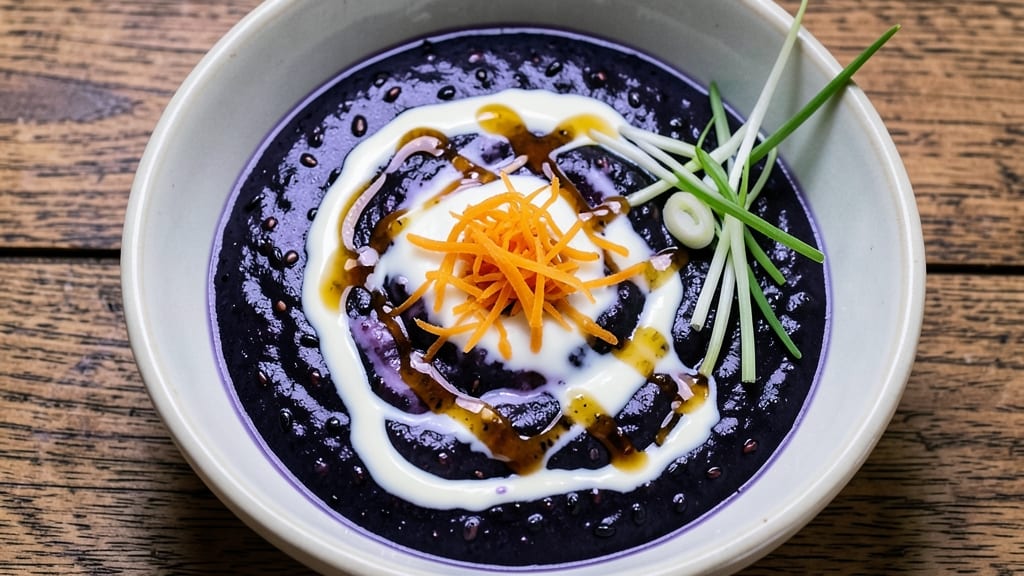
Transforming deep blue black rice into velvety porridge is an art that delivers both visual drama and comforting texture. This recipe unlocks the rich, earthy essence of black rice—naturally packed with antioxidants—while achieving that signature creamy consistency that feels like a hug in a bowl.
The process is straightforward but requires patience to coax the perfect balance between smoothness and subtle bite.
What makes this porridge special is its versatility: serve it sweet with coconut milk and honey for a dessert-like treat, or savory with ginger and scallions for a nourishing breakfast.
The transformation from vibrant blue grains to luscious porridge is where the magic happens—each spoonful reveals layers of flavor and a satisfying mouthfeel that keeps you coming back. Ready to master this comforting staple?
Ingredients for black rice porridge
Eleven ingredients transform vibrant black rice into velvety porridge with antioxidant-rich depth and comforting creaminess.
| Ingredient | Amount | Notes |
|---|---|---|
| Black Rice 🌾 | 1 cup | Uncooked, high-quality variety |
| Water 💧 | 4 cups | Filtered preferred for clarity |
| Coconut Milk 🥥 | 1 can | Full-fat for creaminess (13.5 oz) |
| Honey 🍯 | ¼ cup | Raw preferred for depth (adjust to taste) |
| Fresh Ginger 🧄 | 1 tbsp | Finely grated, aromatic |
| Green Onions 🧅 | 3 whole | Thinly sliced, white and green parts |
| Sesame Oil 🫒 | 1 tsp | Toasted for nutty aroma |
| Salt 🧂 | ½ tsp | Diamond Crystal preferred |
| Vanilla Extract 🍦 | ½ tsp | Pure for subtle sweetness |
| Cinnamon 🌿 | ¼ tsp | Ground, for warmth |
| Pinch Cloves 🌶️ | 2 pinch | Whole, lightly crushed |
The black rice is the foundation—look for whole grain varieties at specialty stores like Whole Foods or Asian markets. Brands like Lundberg offer high-quality options, but any deep blue-black rice will work. The coconut milk should be full-fat for that luxurious texture; Thai Kitchen cans are my go-to. Fresh ginger is non-negotiable here—the more aromatic, the better. If you can't find fresh, use 0.5 tsp ground ginger, but it won't have the same depth. The honey should be raw and unfiltered for its natural enzymes and flavor complexity.
No coconut milk? Substitute with equal parts heavy cream and water for a lighter texture, though it won't be as rich. Fresh ginger unavailable? Powdered works at half the amount, but toast it first in a dry pan for 30 seconds to wake up the flavors. The honey can be swapped for maple syrup or agave, though honey's floral notes are ideal. For a savory version, omit the honey and use soy sauce or miso paste instead. The vanilla extract adds subtle sweetness—imitation vanilla has a harsh aftertaste, so splurge on pure if possible. The cinnamon and cloves are optional but elevate the porridge's warmth.
This porridge tastes even better the next day as flavors meld. Store in an airtight container in the fridge for up to 5 days. For longer storage, freeze in single-serving portions for up to 3 months. Reheat gently on low heat, stirring occasionally, and add a splash of water or milk if it thickens too much. The black rice's vibrant color fades slightly as it cooks—embrace the transformation from deep blue to rich brown. Garnish with extra sesame oil and green onions just before serving to brighten the dish.
Why You'll Love This Recipe
- Five-Ingredient Magic: This porridge is my go-to when I’m too tired to overthink dinner—just rice, water, coconut milk, honey, and ginger. No chopping, no fuss, and the black rice does all the heavy lifting with its natural nuttiness.
- Warm Spice Hug: That ginger-coconut-honey combo? It’s like a cozy blanket for your taste buds. The ginger adds a bright kick, coconut milk makes it velvety, and honey ties it all together with just the right sweetness—no cloying aftertaste.
- Breakfast to Bedtime: I make a big batch on Sundays (it reheats perfectly) and eat it for breakfast, lunch, or even dessert. Add a fried egg for protein in the morning or top it with toasted nuts for crunch at night—it’s that adaptable.
- Budget-Friendly Luxury: Black rice is pricey, but this recipe stretches it far—coconut milk and honey feel indulgent without breaking the bank. Plus, leftovers keep for days, so I’m not scrambling for meals midweek.
Step-by-step instructions for black rice porridge
Transform vibrant black rice into velvety porridge with this method—simple yet precise.
Rinse and Soak the Black Rice
Place the 1 cup black rice in a fine-mesh strainer and rinse under cold water until the water runs clear. This removes excess starch that can make the porridge gummy. Transfer the rice to a bowl and cover with 4 cups water. Let it soak for at least 4 hours or overnight—this ensures even cooking and maximizes nutrient absorption. The rice should triple in size and develop a deep purple hue, signaling it's ready for cooking.
I always soak rice in the refrigerator to prevent bacterial growth. If short on time, a minimum 2-hour soak works, but longer soaking yields creamier results. Drain the rice thoroughly before cooking to avoid a watery porridge.
Simmer the Rice in Coconut Milk
In a heavy-bottomed pot, combine the soaked black rice with the 1 can coconut milk. Bring to a boil over medium-high heat, then immediately reduce to a gentle simmer. Stir occasionally and skim off any foam that rises to the surface—this ensures a smooth, velvety texture. Simmer uncovered for 45-60 minutes, stirring every 10 minutes to prevent sticking.
The key here is patience. The rice will break down gradually, releasing its deep blue-purple pigments into the coconut milk. You'll know it's ready when the mixture thickens to a pudding-like consistency, similar to oatmeal but richer. If it's too thick, add 2-3 tablespoons water to reach your desired creaminess.
Infuse with Aromatics and Sweeten
Once the rice is tender, stir in the 1 tbsp finely grated fresh ginger, 2 pinch lightly crushed cloves, and 0.5 tsp salt. Simmer for an additional 5 minutes to allow the spices to bloom and deepen the flavor profile. Remove from heat and let it cool slightly—this prevents the honey from seizing when added.
In a separate bowl, whisk together the 0.25 cup honey, 0.5 tsp vanilla extract, and 0.25 tsp cinnamon until fully dissolved. Slowly pour this mixture into the porridge while stirring continuously. The heat from the porridge will help the honey integrate smoothly, creating a silky, balanced sweetness. Taste and adjust the honey to your preference—this is where personalization matters most.
Finish with Garnishes
Transfer the porridge to serving bowls and let it sit for 5 minutes to thicken slightly. Drizzle with 1 tsp toasted sesame oil and top with the 3 whole green onions, thinly sliced on the bias for visual appeal. The sesame oil adds a nutty depth, while the green onions provide a fresh contrast to the rich porridge.
Serve immediately while warm. The porridge should have a luxurious, custard-like texture with a subtle blue tint from the black rice. Each spoonful should deliver a harmonious blend of creamy coconut, aromatic spices, and natural sweetness—comfort in every bite.
Pro Tips For Making Black Rice Porridge
- SOAK THE RICE OVERNIGHT: Black rice is stubborn—it refuses to soften properly if you’re in a hurry. I learned this the hard way after slurping a gritty, undercooked mess. Soak the rice in cold water for at least 8 hours (or overnight if you can swing it). Rinse it twice before cooking to wash away excess starch, which keeps the porridge from turning gluey.
- SIMMER LOW AND LONG: This isn’t the time for a rushed boil. After adding water, bring the rice to a gentle simmer—think tiny bubbles, not a rolling frenzy—and let it cook uncovered for 45–60 minutes. Stir occasionally to prevent sticking, and resist the urge to crank the heat. The longer it cooks, the creamier and deeper in flavor it gets.
- GRATE THE GINGER FINE: Fresh ginger is non-negotiable here, but most recipes underplay how much you need. Use a microplane or the finest grater you own—no chunky slices or minced bits. A tablespoon of freshly grated ginger (packed) adds bright, zesty warmth that coconut milk alone can’t match. Taste as you go; you can always dial it back, but you can’t fix blandness later.
- STIR IN COCONUT MILK LAST: Adding coconut milk too early turns the porridge into a thin, watery soup. Wait until the rice is fully tender and the liquid has reduced to a thick, pudding-like consistency before folding in the coconut milk. Heat it gently with the porridge—just until warmed through—so the flavors meld without curdling. A splash of honey at this stage balances the richness perfectly.
Pro cooking tips for this recipe
Pot Control Matters
Use a heavy-bottomed pot—like a Le Creuset Dutch oven or All-Clad stainless steel—to prevent scorching. The black rice releases deep pigments during cooking, and a thin pot can burn these flavors.
I’ve ruined porridge in nonstick pans when the heat wasn’t evenly distributed, so invest in quality here. 🔥
Stirring Schedule
Stir your porridge every 10 minutes during the 45-60 minute simmer to prevent sticking. The black rice breaks down unevenly, so consistent stirring ensures a smooth, velvety texture. If you forget, add 1 tbsp water per 5 minutes of missed stirring to salvage it.
Honey Integration
Warm the honey mixture (honey + vanilla + cinnamon) separately before adding it to the porridge. Cold honey can create seized clumps that ruin the silky consistency. Stir continuously while pouring to distribute evenly—this is where the magic of emulsification happens, blending flavors seamlessly.
Garnish Timing
Add sesame oil and green onions right before serving—they wilt if added too early. The toasted sesame oil should sizzle slightly when drizzled, releasing its nutty aroma. For extra flair, sprinkle crushed peanuts or toasted coconut flakes on top for crunch. 🌟
Texture Troubleshooting
If your porridge is too thick, thin it with warm coconut milk (not water) to preserve richness. For too thin, simmer uncovered for 5-10 extra minutes to evaporate excess liquid. The ideal texture should coat the back of a spoon but still be spoonable—like a luxurious pudding.
Flavor Boost Hacks
For a savory twist, replace honey with 1 tbsp soy sauce + ½ tsp miso paste and add shredded chicken or tofu. For extra depth, toast the black rice in a dry pan for 2 minutes before soaking—this enhances its nutty, earthy notes.
The possibilities are endless once you master the base! ⚡
Nutrition facts
Frequently asked questions
Why does my black rice porridge turn gray instead of blue?
The deep blue color fades as black rice cooks due to its anthocyanin pigments breaking down from heat. The final porridge should have subtle blue-gray undertones—this is normal! For richer color, use 1 extra tablespoon of coconut milk per cup of rice, which helps preserve the pigments during simmering.
Can I make this porridge without coconut milk?
Yes! For a lighter version, substitute with 1 cup heavy cream + 1 cup water per can of coconut milk. For dairy-free options, use full-fat cashew cream (blend soaked cashews with water) or oat milk (though texture will be thinner). The coconut milk's richness is ideal, but these alternatives work in a pinch.
How do I adjust the sweetness for different tastes?
Start with the ¼ cup honey and adjust in 1 tablespoon increments. For less sweetness, reduce honey by 2 tablespoons and add ½ teaspoon lemon juice to balance flavors. For extra depth, replace 1 tablespoon honey with 1 teaspoon maple syrup + pinch of cardamom.
Is black rice porridge gluten-free and nut-free?
This recipe is naturally gluten-free (no wheat/barley/rye) and nut-free (unless you add toppings like crushed peanuts). Always check your coconut milk brand for cross-contamination warnings if severe allergies are a concern. For extra safety, use certified gluten-free black rice and a dedicated nut-free kitchen space.
Can I make this porridge in an Instant Pot?
Rinse and soak the rice as directed, then combine with 1 can coconut milk in your Instant Pot. Cook on high pressure for 20 minutes, then quick-release. Stir in aromatics and honey, then transfer to a pot to simmer for 5 extra minutes to achieve the perfect creamy texture. The pressure cooker speeds up the process while preserving nutrients.