
Side Dishes
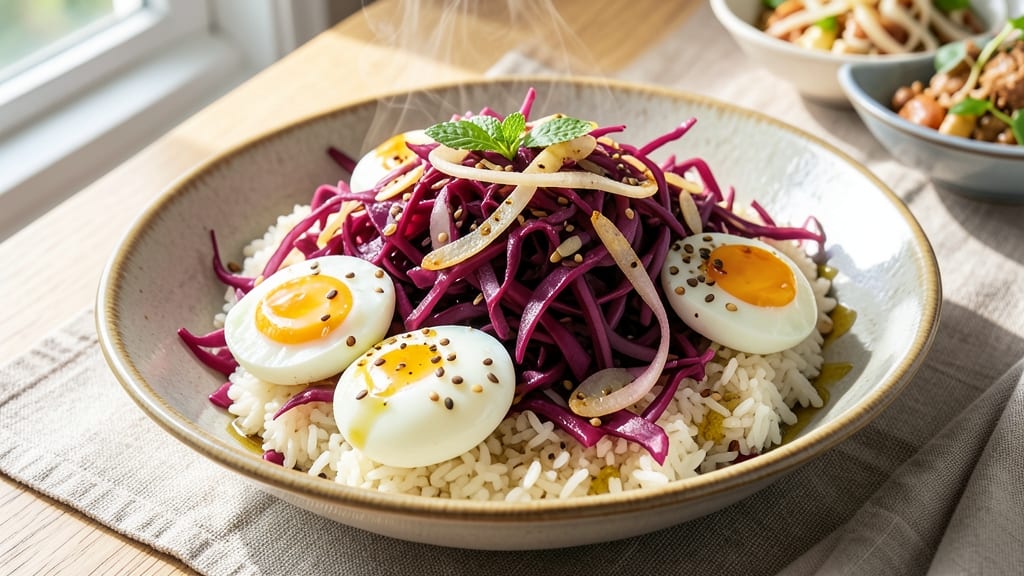
This cabbage egg rice recipe transforms simple ingredients into a one-pan savory masterpiece with perfectly crispy edges and tender textures. The secret lies in stir-frying the cabbage until golden while keeping the rice fluffy and eggs silky—no soggy bits here.
I developed this dish after craving something hearty yet light, and it became an instant weeknight favorite.
What makes this recipe stand out is the balance of textures: crispy cabbage, fluffy rice, and creamy eggs all cooked together in one pan. The method is straightforward—just sauté, simmer, and finish with a quick scramble—but the result feels restaurant-quality.
This dish pairs beautifully with grilled meats or stands alone as a satisfying main.
Ingredients for cabbage egg rice
Twelve essential ingredients for a restaurant-style one-pan cabbage egg rice masterpiece.
| Ingredient | Amount | Notes |
|---|---|---|
| Green Cabbage 🥬 | 6 cups | Shredded, outer leaves removed |
| Large Eggs 🥚 | 6 whole | Fresh, room temperature |
| Jasmine Rice 🍚 | 1 ½ cups | Uncooked, long-grain preferred |
| Vegetable Oil 🫒 | ½ cup | High smoke point for frying |
| Garlic Cloves 🧄 | 4 cloves | Minced, fresh preferred |
| Fresh Ginger 🌿 | 1 tbsp | Finely grated, peeled |
| Soy Sauce 🥢 | 3 tbsp | Light or all-purpose |
| Sesame Oil 🫒 | 1 tbsp | Toasted, for aroma |
| Salt 🧂 | 1 ½ tsp | Diamond Crystal preferred |
| Black Pepper 🌶️ | ½ tsp | Freshly ground |
| Green Onions 🧅 | 4 whole | Sliced, white and green parts |
| Water 💧 | 2 ½ cups | For rice cooking |
| Sesame Seeds 🌾 | 1 tbsp | Toasted, for garnish |
The cabbage is the star—opt for firm, crisp heads with vibrant green leaves, as they hold up best during stir-frying. Whole Foods or Trader Joe's carry excellent quality, or check the produce section for heads with tightly packed leaves. Avoid wilted or yellowing outer leaves, as they indicate age. For extra crispiness, slice the cabbage into even strips about 1/4-inch thick using a sharp mandoline or knife. The garlic and ginger should be freshly minced for maximum flavor impact, and toasted sesame oil adds depth that pre-bottled versions can't match.
No jasmine rice? Basmati or long-grain white rice works equally well, though the aroma won't be identical. Short on sesame oil? A touch of toasted peanut oil provides a similar nuttiness, though the flavor profile shifts slightly. The soy sauce can be swapped for coconut aminos if you're avoiding soy, though the color will be lighter. For a quicker prep, use pre-shredded cabbage (the bagged kind), though it may release more moisture during cooking. The eggs should be fresh but room temperature—cold eggs tend to scramble unevenly in the pan.
Rice keeps best in an airtight container in the fridge for 3-4 days, though the texture softens over time. The cabbage mixture reheats beautifully—simply warm in a skillet with a splash of water for 2-3 minutes. For longer storage, freeze the cooked rice and cabbage mixture separately: rice for up to 3 months and cabbage for 2 months. Garnish with toasted sesame seeds just before serving to preserve their crunch. This dish tastes even better the next day as flavors meld together.
Why You'll Love This Recipe
- One-Pan Magic: I swear, this recipe lives in my rotation because it’s that simple. Sauté the cabbage until it softens, crack in those eggs right into the pan—no fancy bowls, no mess—and let them nestle into the rice. Honestly, the only real effort is chopping the garlic, and even that’s just four cloves.
- Garlic-Cabbage Crunch: That crisp-tender cabbage with runny yolks pooling over jasmine rice? It’s the kind of dish where every bite feels like a little victory. The garlic hits just right—not overpowering, but deep enough to make you reach for seconds. (Yes, even on a Tuesday night.)
- Lunchbox Gold: Between us, this is my go-to for meal prep. The rice stays fluffy for days, the cabbage keeps its bite, and those fried eggs? Still perfect cold. Pack it for work, reheat it for dinner—it’s the ultimate no-thoughts-required meal.
- Pocketbook Hero: Green cabbage and eggs are dirt cheap, and a bag of jasmine rice lasts forever. I’ll be real: this feeds four for under $5, and the leftovers? Even better the next day. It’s the kind of recipe that makes you feel like you’re winning at life.
Step-by-step instructions for cabbage egg rice
Master this one-pan technique for perfectly balanced textures—crispy cabbage edges, tender rice, and silky eggs.
Prepare the Cabbage and Rice Base
Heat the 0.5 cup vegetable oil in a large, deep skillet over medium-high heat until shimmering but not smoking. Add the 6 cups shredded green cabbage in batches, stirring constantly for 3-4 minutes until the outer edges begin to soften and develop golden-brown crispiness. This initial searing prevents the cabbage from turning mushy during cooking.
Push the cabbage to one side of the skillet and add the 1.5 cups jasmine rice, spreading it evenly. Stir for 1 minute to lightly toast the grains, which enhances their nutty flavor. Pour in the 2.5 cups water, then add the 3 tbsp soy sauce, 1 tbsp sesame oil, 1.5 tsp salt, and 0.5 tsp black pepper. Bring to a gentle boil, then reduce heat to low and cover the skillet tightly with a lid. Let it simmer for 12 minutes—this ensures the rice absorbs moisture evenly while the cabbage continues to soften.
Incorporate Aromatics and Cook the Eggs
After 12 minutes, remove the lid and stir in the 4 cloves minced garlic cloves and 1 tbsp finely grated fresh ginger. Cook for 1 minute until the garlic turns light golden and releases its fragrance. This step infuses the dish with depth without overpowering the delicate flavors.
Create 6 small wells in the rice-cabbage mixture using the back of a spoon. Crack the 6 whole large eggs into these wells, being careful not to break the yolks. Cover the skillet again and cook for 5-6 minutes on low heat. The eggs should set gently, with yolks remaining creamy and runny inside. If the edges brown too quickly, reduce the heat slightly to prevent overcooking.
Finish with Green Onions and Toast Sesame Seeds
Once the eggs are just set, remove the skillet from heat and let it rest for 2 minutes. This resting period allows the residual heat to finish cooking the rice and eggs evenly. Stir in the 4 whole sliced green onions, distributing them evenly throughout the dish. Their freshness cuts through the richness of the eggs and adds a bright contrast.
In a small dry skillet, toast the 1 tbsp sesame seeds over medium heat for 1-2 minutes until they turn golden and fragrant. Sprinkle them evenly over the cabbage egg rice just before serving. The toasted seeds add a nutty crunch and visual appeal, completing the dish. Serve immediately while the eggs are still warm and the cabbage retains its crisp edges.
Pro Tips For Making Cabbage Egg Rice
- CUT CABBAGE THIN, NOT SMALL: I learned this the hard way—tiny shreds turn to mush while bigger slices stay crisp enough to hold their shape. Aim for ¼-inch strips, then stack them loosely in the pan so they cook evenly without steaming into soggy piles.
- FRIZZ EGGS IN BATCHES: Crowd the pan and you’ll end up with sad, greasy yolks. Work in pairs—two eggs at a time—over medium-high heat until edges set, then flip. The sizzle should sound like a tiny symphony, not a sad fizzle.
- SALT THE RICE WATER LATE: Add salt to the rice water after it boils, or the cabbage will draw out all the moisture like a sponge. Wait until the rice is halfway cooked, then season—this keeps every grain fluffy and the cabbage from turning into a wet blanket.
- GARLIC: MINCE, NOT CHOP: My grandmother swore by this, and she was right: finely minced garlic (not rough chopped) blends into the rice instead of sitting as chunks. Pulse it in a food processor for 3 seconds—just until it’s paste-like, then stir it into the oil before anything else hits the pan. No more garlic surprises.
Regional styles of these flavors
Korean Kimchi Bokkeumbap
This Korean-inspired version swaps fresh cabbage for fermented kimchi—about 3 cups chopped—for a tangy, probiotic-rich twist. Replace the soy sauce with 2 tbsp gochujang (Korean chili paste) and 1 tbsp rice vinegar to balance the heat.
Use short-grain sushi rice for extra stickiness, and top with a fried egg instead of scrambled. Serve with a side of spicy miso soup for a full Korean meal experience. 🌶️
Japanese Tamago Kake Gohan
For a Japanese-inspired take, use bok choy instead of cabbage (4 cups shredded) and prepare the rice separately in a rice cooker. Stir-fry the bok choy with 1 tbsp mirin and 1 tbsp dashi powder dissolved in water.
Top with a raw egg (tamago) and let it poach in the hot rice—this creates a silky, custard-like texture. Garnish with toasted nori strips and shredded bonito flakes for an umami boost. 🍜
Thai Green Curry Rice
Transform this into a Thai-inspired curry by sautéing the cabbage with 2 tbsp green curry paste and 1 cup coconut milk after toasting the rice. Add 1/2 cup Thai basil leaves and 1/2 cup red bell pepper strips for color.
Top with a soft-boiled egg (6 minutes) and drizzle with sweet chili sauce. Serve with lime wedges and crushed peanuts for crunch. 🌿
Vietnamese Cabbage Egg Pho
Blend this into a noodle bowl by using rice noodles instead of rice and adding a pho-style broth. Sauté the cabbage with 1 tbsp fish sauce and 1 tsp sugar, then stir in 4 cups beef or chicken broth.
Top with rice noodles, a soft-boiled egg, and fresh herbs like Thai basil, mint, and cilantro. Serve with hoisin sauce and sriracha on the side. 🌱
German Sauerkraut Eggs
Swap the cabbage for 3 cups sauerkraut (drained and rinsed) and cook it until crispy. Use applewood-smoked bacon instead of oil for frying, and add 1 tsp caraway seeds to the rice.
Top with scrambled eggs and finish with chopped chives and a sprinkle of crumbled blue cheese. Serve with butter-poached apples for a hearty German-inspired dish. 🍎
Indian Cabbage Egg Biryani
For an Indian twist, use basmati rice and cook it with 1/2 cup yogurt, 1 tsp turmeric, and 1 tsp garam masala. Stir in 1 cup shredded cabbage and 1/2 cup peas before adding the eggs.
Top with a fried egg and garnish with fried onions, mint leaves, and a squeeze of lemon. Serve with raita (yogurt sauce) and pickled onions. 🌶️
Nutrition facts
Frequently asked questions
Can I substitute white cabbage for green cabbage in this recipe?
Yes, you can use white cabbage, but the texture and flavor will differ slightly. Green cabbage has a milder taste and slightly sweeter notes, while white cabbage is more robust and can become slightly bitter when overcooked. For best results, reduce the cooking time by 1 minute to maintain crisp edges.
How do I keep the eggs from turning rubbery?
To prevent rubbery eggs, cook them on low heat and avoid stirring them once they're in the wells. Cover the skillet tightly to trap steam, which helps the eggs cook gently. Remove the skillet from heat 1 minute before the eggs are fully set—they'll finish cooking from residual heat.
Can I make this recipe without a deep skillet?
You can use a wide, shallow skillet, but you may need to cook the cabbage in batches to avoid overcrowding. This prevents the cabbage from steaming instead of crisping. If using a non-stick pan, reduce the oil slightly to 0.3 cups to prevent sticking. Stir frequently to ensure even browning.
What if my rice turns out mushy?
Mushy rice usually happens from overcooking or too much liquid. Next time, reduce the water by 0.25 cups and check the rice 10 minutes after adding water. If it's still firm, let it sit covered for 2 extra minutes off the heat. For extra insurance, use a 1:1.2 ratio of rice to water instead of 1:1.5.
Can I prepare this dish ahead of time?
Yes! Cook the rice and cabbage mixture up to 2 days ahead and store in an airtight container. Reheat gently in a skillet with 1 tablespoon water to restore crispness. Add the eggs fresh—scrambling them separately and mixing in just before serving preserves their creamy texture. For make-ahead convenience, pre-chop all veggies and store them separately in the fridge.