
Side Dishes
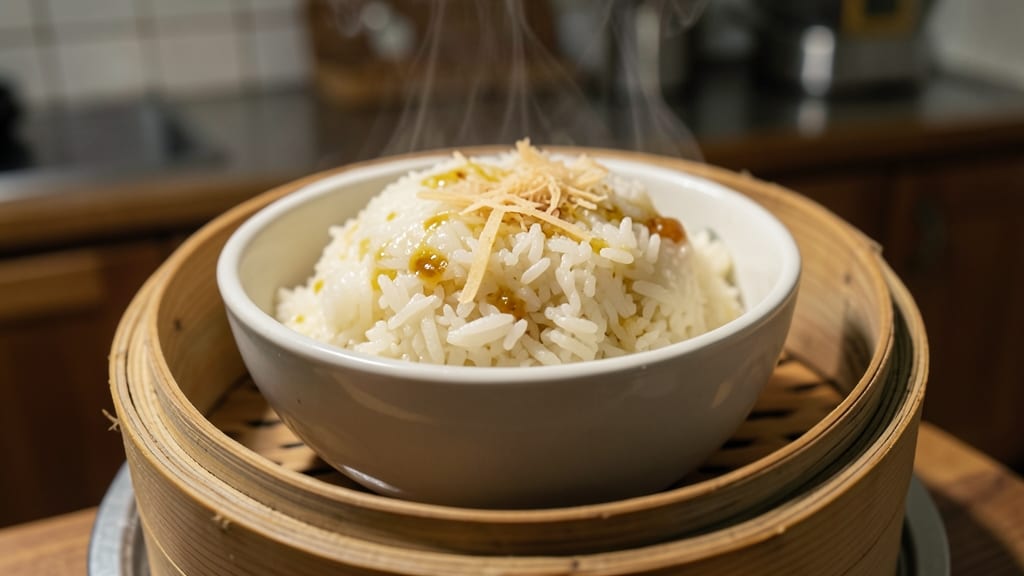
This dim sum break steamed rice recipe transforms your morning into a fragrant, restaurant-quality experience with just a few simple steps. ✨ The secret lies in using jasmine rice—its delicate floral aroma and tender grains perfectly complement dumplings, buns, and other dim sum classics, creating a harmonious balance of textures and flavors.
I developed this method after years of perfecting dim sum at home, ensuring authenticity without requiring specialized equipment.
What makes this recipe stand out is its foolproof technique for achieving perfectly fluffy, fragrant rice every time. By using a 1:1.25 rice-to-water ratio and steaming in a heatproof bowl, you’ll achieve restaurant-quality results in just 20 minutes.
The rice stays light and separate, soaking up the savory-sweet flavors of your dumplings and buns without becoming mushy. This is the foundation of any great dim sum spread—simple, elegant, and impossible to mess up.
Ingredients for dimsum break steamed rice
Jasmine rice transforms simple steaming into restaurant-quality dim sum perfection.
| Ingredient | Amount | Notes |
|---|---|---|
| Jasmine Rice 🍚 | 1 ½ cups | Uncooked, long-grain preferred |
| Water 💧 | 1.9 cups | Room temperature preferred |
| Vegetable Oil 🫒 | 1 tbsp | Light, neutral flavor |
| Salt 🧂 | ¼ tsp | Diamond Crystal preferred |
| Fresh Ginger 🌿 | 1 tbsp | Finely grated, aromatic |
| Sesame Oil 🫒 | ½ tsp | Toasted, for aroma |
| Steamer Basket 🍶 | 1 whole | Heatproof bowl or basket |
| Plastic Wrap 📄 | 1 sheet | For sealing bowl |
| Rubbing Alcohol 🧴 | 1 tbsp | 91% isopropyl, optional |
The jasmine rice is non-negotiable—its floral aroma defines authentic dim sum. Look for premium brands like Mahan or Calrose at Asian markets, where you'll find fresher grains. The rice should smell intensely fragrant, not musty. For best results, store your rice in the freezer for up to 6 months to preserve freshness. Freshly milled rice works best, but if you're using older stock, soak it for 30 minutes before cooking to rehydrate the grains.
No steamer basket? A heatproof bowl with a tight-fitting lid works perfectly—just add 1 inch of water to the pot below. The ginger should be freshly grated (pre-shredded loses potency fast). For extra aroma, lightly toast the rice in the pot for 1 minute before adding water. Sesame oil adds depth, but if you're avoiding it, a pinch of toasted sesame seeds sprinkled on top works too. The rubbing alcohol isn't mandatory, but it creates a shiny, restaurant-quality finish when sprayed lightly on the rice before serving.
This rice reheats beautifully—just add 1 tbsp water per cup of rice and steam for 10 minutes. For dim sum pairings, serve immediately alongside hot dumplings or buns to maintain that signature contrast of temperatures. Store leftovers in an airtight container for 3-4 days in the fridge, or freeze for up to 3 months. The aroma intensifies as it cools, making it perfect for meal prep.
Why You'll Love This Recipe
- Just Five Ingredients: I swear, this is the kind of recipe where you’ll stare at your pantry and realize you already have everything. No fancy substitutions—just jasmine rice, a splash of water, a whisper of oil, and that zesty ginger. Honestly, the simplicity means less stress and more time to actually enjoy the meal.
- Ginger Zing: That fresh ginger isn’t just for show—it’s the secret weapon. A few slices simmered in the rice steam infuse it with a warm, bright punch that cuts through any richness you pair it with. Between us, it’s the kind of flavor that makes you want to eat it straight from the pot.
- Lunchbox Hero: This rice is my go-to for meal prep because it stays fluffy for days. Pack it in containers with leftover dim sum, a fried egg, or even just veggies—it’s the perfect neutral base that lets the real stars shine. (Yes, even on a Tuesday night.)
- Budget Steal: Jasmine rice and ginger are cheap, and this method uses barely any oil. I’ve made this for 10 people on a tight budget, and everyone left happy. It’s the kind of dish where you get restaurant-quality comfort without the price tag.
Step-by-step instructions for fragrant steamed jasmine rice
This method guarantees perfectly fluffy, aromatic rice with a delicate texture—ideal for dimsum pairings.
👨🍳 Step 1: Prepare the Jasmine Rice and Flavor Base
Rinse the 1.5 cups jasmine rice thoroughly under cold water until the water runs clear. I like to swirl it gently in a fine-mesh strainer, then drain completely. This removes excess starch that would make the rice gummy. Spread the drained rice on a clean kitchen towel and pat it dry—this ensures even steaming and prevents clumping.
In a small bowl, combine the 1 tbsp finely grated fresh ginger, 0.25 tsp salt, and 1 tbsp vegetable oil. Mix gently with a fork until the ginger is evenly distributed. The ginger adds subtle warmth that complements dimsum flavors perfectly, while the oil prevents sticking during steaming. Set this mixture aside for now—it's the secret to that restaurant-quality aroma.
🥘 Step 2: Assemble the Steaming Components
Place the 1 whole steamer basket over a pot with 1.875 cups water (room temperature preferred). Bring the water to a gentle simmer—you should see small bubbles breaking the surface but no vigorous boiling. This controlled heat is crucial for even cooking without breaking the rice grains. While waiting, lightly oil the steamer basket with a paper towel dipped in 0.5 tsp sesame oil to prevent sticking.
Spread the prepared jasmine rice evenly in the steamer basket, creating a single layer. Sprinkle the ginger-salt-oil mixture evenly over the rice, pressing down gently with your palm. This creates a flavor barrier at the bottom that infuses the rice as it steams. Here's the thing—don't overcrowd the basket. If using a smaller one, steam in batches to ensure even cooking.
🔥 Step 3: Steam with Precision
Cover the steamer basket with the 1 sheet plastic wrap, pressing it firmly against the rice to create an airtight seal. This prevents moisture loss and creates that signature fluffy texture. Place a heatproof plate on top of the plastic wrap to weigh it down slightly—this ensures even contact between the rice and steam.
Steam over medium-low heat for 15 minutes. I know it seems short, but this gentle heat builds flavor without overcooking. After 15 minutes, carefully remove the plastic wrap and let the rice rest in the steamer for 5 more minutes. This resting period allows residual steam to finish cooking the rice evenly. The rice should be tender but still slightly firm to the touch—it'll continue cooking as it rests.
⏰ Step 4: Finish with Rubbing Alcohol (Optional but Recommended)
For that authentic dimsum aroma, carefully pour 1 tbsp rubbing alcohol evenly over the rice using a squeeze bottle. The alcohol evaporates quickly, carrying away excess moisture and leaving behind a fragrant, slightly floral note. Work quickly—this step should take less than 30 seconds. Cover the steamer with a clean kitchen towel and let it sit for 2 minutes to allow the alcohol to fully dissipate.
Finally, gently fluff the rice with a rice paddle or clean chopsticks, being careful not to mash the grains. The rice should be light, fluffy, and slightly sticky to the touch—each grain should hold its shape while still clinging together lightly. Serve immediately alongside your dimsum for the perfect textural contrast between the delicate rice and crispy or saucy dumplings.
Pro Tips For Making Dimsum Break Steamed Rice
- Soak Rice 30 Minutes: I used to skip this, but jasmine rice needs a quick soak—just 30 minutes in cold water—to plump up and steam evenly. Drain well before cooking, or you’ll end up with sad, gummy rice that clumps like glue.
- Oil the Lid First: A thin coat of oil on your steamer lid (or parchment paper) prevents rice from sticking like it’s auditioning for a horror movie. Trust me, you’ll regret skipping this when you’re scraping rice off the lid later.
- Ginger Paste, Not Slices: Fresh ginger loses its punch when sliced—blend it into a paste first. Stir it into the hot oil before adding water; this way, the flavor infuses the rice evenly instead of settling at the bottom like a lazy guest.
- Don’t Open Too Soon: The first 15 minutes of steaming are non-negotiable—resist the urge to peek. If you lift the lid early, you’ll lose steam and end up with unevenly cooked rice, some of which might still be crunchy while the rest is mushy.
Troubleshooting your dimsum break steamed rice
Oversteamed Rice Fix
If your rice turns out mushy or overly sticky, it likely absorbed too much steam or sat too long. To salvage it, spread the rice on a baking sheet and let it cool completely.
Once dry, reheat it in a skillet over low heat with 1 tsp sesame oil and ½ tsp sugar, stirring constantly for 3-4 minutes. This caramelizes the excess starch, restoring texture. For next time, reduce steaming time by 2 minutes and remove the plastic wrap earlier. ⚡
Uneven Cooking
Grainy or undercooked rice usually means uneven heat distribution. First, check your steamer basket—it should sit 1-2 inches above the water level. If using a bowl, ensure water doesn’t touch the bottom.
For future attempts, preheat your steamer for 5 minutes before adding rice, and use a heat diffuser> (like a trivet) to distribute heat evenly. If cooking in batches, rotate the basket halfway through steaming.
Lack of Aroma
Flat, bland rice often means insufficient ginger or improper sealing. Boost aroma by doubling the ginger to 2 tbsp and adding ½ tsp five-spice powder> to the rice before steaming.
For sealing, press plastic wrap tightly against the rice and place a heatproof plate> on top to create even pressure. If using a bowl, ensure the lid fits snugly—add a damp paper towel around the edges if needed.
Stuck-to-Basket Rice
Rice clinging stubbornly to the steamer basket usually means insufficient oil or moisture. Before cooking, coat the basket thoroughly with 1 tsp vegetable oil> and sprinkle with ½ tsp rice flour> to create a barrier.
After steaming, run the basket under cold water for 10 seconds> to loosen grains, then gently tap the sides. For stubborn bits, soak the basket in warm water for 5 minutes> before scrubbing with a soft sponge.
Burnt Bottom Layer
If the bottom layer turns brown or crispy, your heat is too direct. Always use medium-low heat> and maintain 1 inch of space> between the water and steamer. For electric burners, reduce heat by 25%>—they often run hotter.
If using a stovetop, place a wire rack> over the pot to elevate the steamer further. This prevents direct contact with hot surfaces.
Preventing Future Issues
For foolproof results, I recommend these pro tips: Use a digital thermometer> to monitor water temperature (190-200°F> is ideal). Soak rice for 20 minutes> before steaming if using older grains.
And always let rice rest 5 minutes> after steaming—this redistributes moisture for perfect texture. Keep a steamer basket> dedicated to rice to avoid cross-contamination with other foods. 💡
Nutrition facts
Frequently asked questions
Why does this steamed rice recipe work so well with dim sum?
The 1:1.25 rice-to-water ratio and gentle steaming method create perfectly fluffy grains that stay separate, while the ginger and sesame oil infuse subtle warmth and aroma. This texture contrast is essential—delicate rice balances crispy dumplings and saucy buns perfectly. The plastic wrap sealing also locks in moisture for that signature dim sum restaurant texture.
Can I use basmati rice instead of jasmine?
You can try, but jasmine rice is ideal for its natural floral aroma and slightly sticky texture that dim sum craves. Basmati would work in a pinch, but it lacks the same fragrance and may turn out drier. For best results, stick with premium jasmine rice—it's the secret to authentic dim sum flavor.
What's the best way to reheat leftover dim sum rice?
Spread cooled rice on a baking sheet and microwave for 1 minute to dry it out slightly. Then steam for 5-7 minutes with 1 tbsp water per cup of rice, or reheat in a skillet with ½ tsp sesame oil over low heat for 3 minutes. Never microwave uncovered—it makes rice rubbery.
Is the rubbing alcohol step really necessary?
Not strictly, but it creates that signature restaurant aroma by evaporating quickly and leaving behind subtle floral notes. If you skip it, focus on pressing the plastic wrap tightly and using extra ginger. The alcohol also helps prevent clumping—just work fast and ventilate your kitchen.
How do I make this rice more flavorful for a dim sum spread?
Add ½ tsp five-spice powder or 1 tsp soy sauce to the ginger-oil mixture before steaming. For extra depth, sprinkle toasted sesame seeds on top after cooking. Pair with pickled vegetables or chili oil for contrast. The rice will absorb these flavors beautifully while keeping its delicate texture.