
Side Dishes
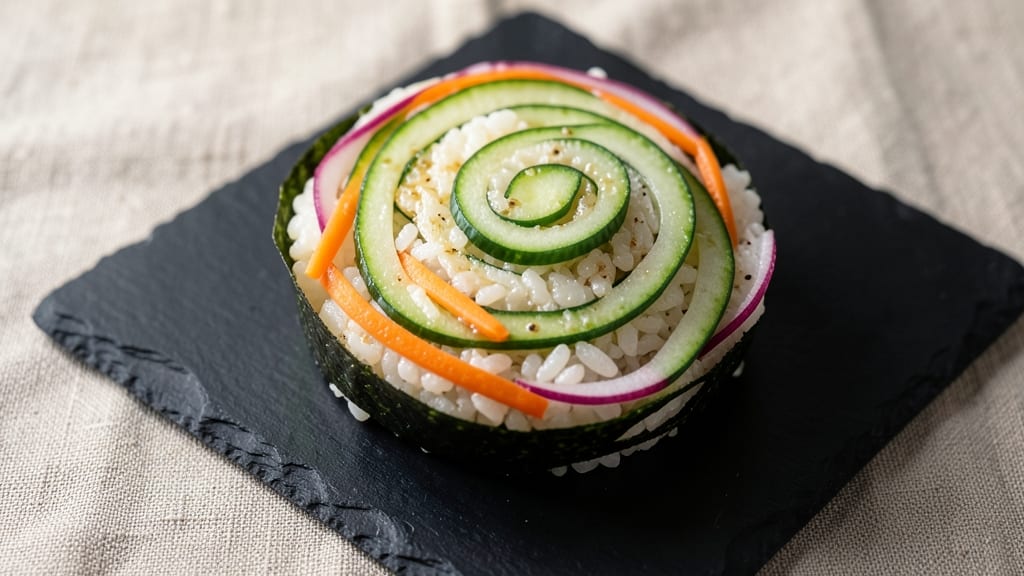
This vegetarian kimbap rice recipe transforms simple sushi rice into vibrant, nori-wrapped rolls packed with crisp pickled veggies and fresh fillings. The key lies in perfectly seasoned rice—sticky yet firm—paired with precise rolling technique to create restaurant-quality texture.
I’ve refined this method over years of testing, ensuring every bite delivers that satisfying crunch and balanced flavor. 💛
The foundation starts with short-grain rice seasoned with a mix of rice vinegar, sugar, and salt, creating just the right stickiness without gumminess. Fillings like quick-pickled cucumber, shredded carrot, and avocado add layers of texture and freshness, while optional additions like spicy gochujang or sesame seeds introduce depth.
The nori sheets provide structure, holding everything together in neat, sliceable rolls that stay fresh for days.
What you’ll achieve is a visually stunning dish that’s as satisfying to eat as it is to make—crisp pickled veggies contrast with tender rice, and the nori adds a subtle oceanic aroma.
Each slice reveals perfectly balanced flavors, making this ideal for meal prep or special occasions. The rolling technique might seem tricky at first, but I’ve included step-by-step guidance to ensure foolproof results.
For variations, try adding kimchi for tangy heat or sweetened red bean paste for a dessert-style twist. Serve with spicy mustard or soy sauce for dipping, or enjoy as-is for a complete, protein-packed vegetarian meal. Let’s get rolling!
Ingredients for kimbap rice
Perfectly seasoned rice and crisp fillings create restaurant-quality kimbap rolls with every bite.
| Ingredient | Amount | Notes |
|---|---|---|
| Short-Grain Sushi Rice 🍚 | 2 cups | Uncooked, Japanese short-grain |
| Rice Vinegar 🍶 | ¼ cup | Seasoned, mild flavor preferred |
| Granulated Sugar 🍚 | 2 tbsp | Fine grain for even dissolving |
| Diamond Crystal Kosher Salt 🧂 | 1 ½ tsp | Fine grain, not iodized |
| Nori Sheets 🍣 | 8 whole | High-quality, 7-inch sheets |
| English Cucumber 🥒 | 1 whole | Seeded, thinly sliced lengthwise |
| Carrots 🥕 | ½ cup | Shredded, medium julienne |
| Avocado 🥑 | 1 whole | Ripe, sliced into thin strips |
| Sesame Seeds 🌾 | 1 tbsp | White or black, toasted |
| Gochujang 🌶️ | 1 tbsp | Korean red pepper paste |
| Sesame Oil 🫒 | 1 tsp | Toasted, for finishing |
| Vegetable Oil 🫒 | 1 tbsp | Light, for rice seasoning |
| Spicy Mustard 🍯 | 2 tbsp | For serving, optional |
| Soy Sauce 🍶 | 2 tbsp | For serving, optional |
| Red Bean Paste 🍡 | ¼ cup | Sweetened, optional filling |
The rice is the heart of kimbap, so Japanese short-grain rice is non-negotiable—it absorbs seasoning better than long-grain. For seasoning, Koyo brand rice vinegar (available at Asian markets) adds subtle sweetness, but Miyoko's works well too. The sugar should dissolve completely—use fine grain and stir vigorously. Diamond Crystal kosher salt is preferred over table salt for even distribution. Nori sheets? Marukyu brand is the gold standard—look for vibrant green color and crisp edges. If using pre-cut nori, avoid the dried, brittle kind; fresh or vacuum-sealed is essential for proper texture.
No rice vinegar? Apple cider vinegar at half the amount works in a pinch, though flavor won't be identical. Substituting sugar? Honey or agave at equal volume, but reduce other liquids slightly to maintain rice texture. For pickled cucumber, quick-pickle with rice vinegar, sugar, and salt (1:1:1 ratio) for 30 minutes—no long soak needed. Avocado turns brown fast, so toss slices with 1 tsp lemon juice to preserve color. The red bean paste can be swapped for mashed sweet potato or black sesame paste for different flavor profiles. Gochujang adds heat; reduce to 1 tsp if sensitive to spice.
Rice seasoning keeps for 1 week in the fridge, but nori sheets last 3 months in the freezer if sealed airtight. Prep fillings last 2 days in the fridge—keep cucumber and avocado separate until ready to roll. Assembled kimbap stays fresh 3 days wrapped tightly in plastic, or freeze for 1 month in slices. For meal prep, portion into individual rolls before freezing—thaw overnight in the fridge for best texture. The sesame seeds should be toasted just before serving to prevent burning during storage.
Why You'll Love This Recipe
- No Rice Cooker Needed: I swear by this—just a pot, a lid, and 15 minutes of simmering. The rice vinegar-sugar mix turns plain short-grain rice into that signature sticky, slightly tangy base without needing a fancy tool.
- Crispy-Sealed Magic: That first bite of nori—still crackling—over creamy rice? Honestly, it’s the little things. The salt and vinegar balance makes every roll taste like a fresh start, even if I’m eating it cold from the fridge.
- Lunchbox Legend: Between us, this is my go-to for school lunches or picnic spreads. Roll it once, slice it later—no reheating, no soggy mess. My kids actually finish what I pack, and that’s saying something.
- Budget Meal Multiplier: Short-grain rice and nori stretch forever. I make a big batch, slice it into bite-sized pieces, and suddenly I’ve got snacks for the week, potluck leftovers, or a last-minute charcuterie board filler. Zero waste, maximum flavor.
Step-by-step instructions for korean kimbap rice preparation
Mastering kimbap starts with perfectly seasoned rice—sticky yet distinct, forming the ideal base.
🍳 Step 1: Rinse the Short-Grain Sushi Rice Thoroughly
Place the 2 cups short-grain sushi rice in a fine-mesh strainer and rinse under cold running water for 3-4 minutes, gently swirling the rice with your hands. You'll see the water turn cloudy—this removes excess starch that would make the rice mushy. Continue rinsing until the water runs clear, which typically takes about 5 minutes total.
Drain the rice completely and transfer it to a medium-sized pot. Add 2 cups fresh cold water (the same volume as rice) and bring to a boil over high heat. Once boiling vigorously, reduce heat to low and cover with a tight-fitting lid. Let it simmer for 12 minutes without lifting the lid—this steaming method creates the signature sticky texture.
👨🍳 Step 2: Season the Rice with Vinegar and Sugar
While the rice cooks, prepare the seasoning mixture by combining the 0.25 cup rice vinegar, 2 tbsp granulated sugar, and 1.5 tsp diamond crystal kosher salt in a small bowl. Whisk until the sugar and salt dissolve completely—this ensures even distribution throughout the rice.
Once the rice has finished cooking, remove it from heat and let it sit covered for 10 minutes. Then, gently fold the seasoning mixture into the rice using a wooden rice paddle or spatula. Work quickly but carefully to distribute the mixture evenly without crushing the grains. The rice should be glossy and slightly sticky to the touch, with a delicate tang from the vinegar.
🥘 Step 3: Cool the Rice for Assembly
Spread the seasoned rice evenly on a clean kitchen towel or bamboo mat, breaking up any clumps with your fingers. Let it cool completely to room temperature—this prevents the nori sheets from becoming soggy when you roll the kimbap later. The rice should be cool enough to handle comfortably after about 30 minutes.
Here's the thing—cooling the rice properly is crucial. If you skip this step, your nori will soften prematurely, making clean rolls impossible. I like to fan the rice gently with a spoon to speed up the process while maintaining its texture.
⏰ Step 4: Prepare the Veggie Fillings
While the rice cools, prepare the fillings by thinly slicing the 1 whole english cucumber lengthwise into ⅛-inch strips and shredding the 0.5 cup carrots into medium julienne. Slice the 1 whole avocado into thin strips and set aside. For optional fillings, spread the 0.25 cup red bean paste evenly on half of the nori sheets if using.
Mix the cucumber and carrot shreds in a bowl with 1 tbsp gochujang and 1 tsp sesame oil, tossing gently to coat. This creates the signature sweet-spicy crunch that defines kimbap. Keep all fillings separate until ready to assemble—this prevents premature wilting of the avocado.
Pro Tips For Making Kimbap Rice
- Rinse Until Clear: Don’t eyeball it—rinse your short-grain rice in cold water until the water runs completely clear, not just slightly cloudy. I learned this the hard way: leftover starch makes sticky, gummy rice that falls apart in your rolls. Takes 5 minutes, saves hours of frustration later.
- Salt While Warm: Mix the Diamond Crystal kosher salt into the hot rice immediately after cooking, while it’s still steaming. The grains absorb the seasoning better this way—skip this, and you’ll end up with bland rice that needs extra sauce to fix. (And yes, even if you’re impatient like me.)
- Press Nori Dry: Lay your nori sheets on a dry towel and press them down firmly with a damp cloth for 10 seconds before rolling. This removes excess moisture so the rice doesn’t make them soggy halfway through. Sounds weird, but it works—your rolls will stay crisp longer.
- Cool Before Rolling: Let the seasoned rice sit covered for 10 minutes after mixing the vinegar and salt. Hot rice sticks to itself like glue, making tight rolls impossible. I used to rush this and ended up with lumpy, uneven kimbap every time. (Your future self will thank you.)
Health benefits of this recipe
Balanced Carbohydrates
Kimbap’s foundation—short-grain white rice—provides complex carbohydrates that fuel your brain and muscles with sustained energy. A single roll delivers about 30-40 grams of carbs, making it ideal for post-workout recovery or a light lunch. The rice’s low glycemic index helps maintain stable blood sugar levels, unlike refined grains. 💪
Fiber-Rich Vegetables
Pickled cucumbers and shredded carrots add dietary fiber (about 3-4 grams per serving), supporting digestion and gut health. The fermentation process in quick-pickled veggies also introduces probiotic benefits, boosting your microbiome. Avocado contributes healthy monounsaturated fats for heart health.
Antioxidant Boost
The gochujang in kimbap isn’t just for flavor—it’s packed with capsaicin, a compound that fights inflammation and may reduce oxidative stress. Sesame seeds provide zinc and magnesium, while nori sheets offer iodine (essential for thyroid function) and vitamin K. Together, these ingredients create a nutrient-dense powerhouse.
Low-Calorie Protein
While traditional kimbap includes meat or fish, this vegetarian version relies on plant-based proteins like avocado and sesame seeds. A single roll contains 5-7 grams of protein, helping you stay full without heavy calories. For extra protein, add tofu or edamame—both blend seamlessly into the fillings.
Hydration Support
The high water content in cucumber and avocado keeps you hydrated, while rice vinegar’s tangy acidity aids digestion. This makes kimbap a refreshing, hydrating meal—perfect for hot days or post-exercise recovery. The crisp texture also encourages slower eating, helping you feel satisfied longer. 💧
Nutrition facts
Frequently asked questions
Can I make kimbap without nori sheets?
Yes, but the texture and presentation will differ. Use soy paper (konjac sheets) as a substitute—they hold together better than plastic wrap but lack nori's oceanic aroma. For a no-wrap version, shape the rice and fillings into small balls or patties and pan-fry until crispy for a "kimbap rice bowl" style.
How do I prevent my kimbap from falling apart when slicing?
Chill the completed rolls in the fridge for 30 minutes before slicing—this firms up the rice and nori. Use a sharp, long knife and cut in one smooth motion while holding the roll firmly. For extra stability, lightly toast the nori edges with sesame oil before rolling, or add a thin layer of beaten egg white to the rice before wrapping.
What's the best way to store leftover kimbap?
Wrap tightly in plastic wrap and refrigerate for up to 3 days, or freeze for 1 month. For freezing, slice first and store in an airtight container with parchment between layers. Thaw overnight in the fridge—microwaving causes soggy texture. Reheat slices in a dry pan for 1-2 minutes per side to restore crispness.
Can I make kimbap ahead for meal prep?
Prep all components separately and assemble just before eating. Store rice seasoned (uncooked) for 1 week, fillings for 2 days, and nori in the freezer. The day of serving, cook rice, cool completely, and roll fresh. This keeps everything crisp and flavorful—no soggy surprises!
What are some creative filling variations?
Try spicy tuna (mix canned tuna with mayo, sriracha, and sesame), kimchi for tangy heat, or sweet potato mashed with cinnamon for dessert-style rolls. For protein, add thinly sliced tofu or edamame—both hold shape well when lightly pan-fried first.