
Side Dishes
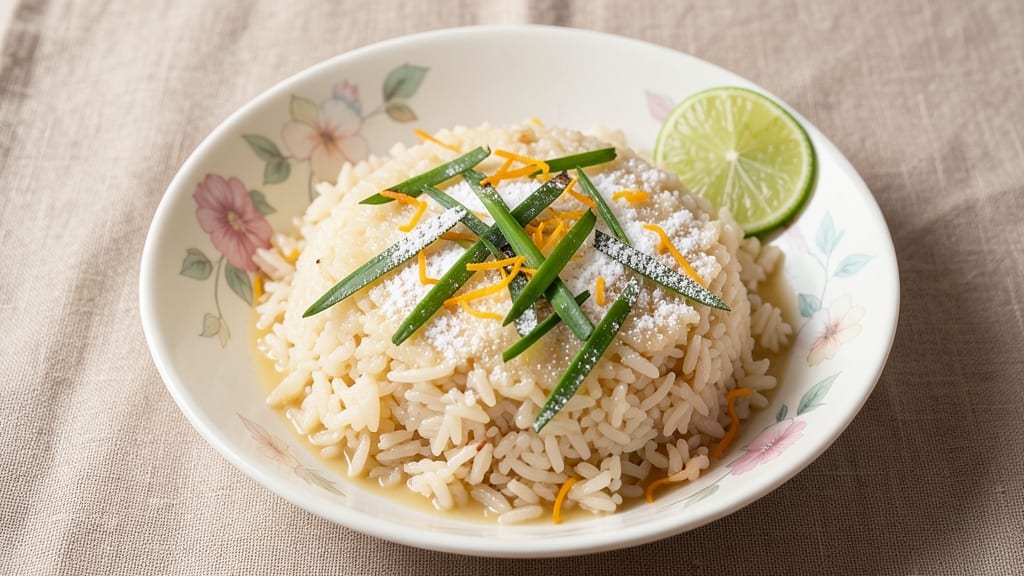
This Vietnamese rice recipe brings the soul of Southeast Asia to your table with fragrant coconut-lime sticky rice infused with pandan hearts—a dish that’s both comforting and vibrant.
The secret lies in balancing sweet coconut milk with bright lime zest, creating a delicate aroma that lingers long after the first bite. I first discovered this version while traveling through Vietnam, where street vendors served it alongside grilled meats and fresh herbs.
What makes this recipe special is its simplicity paired with restaurant-quality results. The sticky rice requires just a few key ingredients—jasmine rice, coconut milk, pandan hearts, and lime—and a precise cooking method that ensures each grain remains tender yet firm.
The pandan hearts add a subtle floral note that elevates the dish beyond ordinary sticky rice, while the lime zest keeps it fresh and bright.
By the time you serve this dish, your kitchen will smell like a bustling Vietnamese market, and your guests will be transported to another world. The fragrant rice pairs beautifully with grilled meats, fresh herbs, or even a simple cucumber salad, making it the perfect centerpiece for any meal.
The texture is what truly sets it apart—each grain is moist yet slightly sticky, with a delicate balance of sweet, tangy, and floral flavors.
This recipe is ideal for special occasions or when you want to impress with authentic Vietnamese flavors. Whether you're serving it at a family gathering or enjoying it as a weeknight dinner, the process is straightforward and the results are unforgettable. Let’s get started on creating this fragrant masterpiece.
Ingredients for vietnamese rice
Fourteen simple ingredients transform into fragrant, restaurant-quality Vietnamese sticky rice.
| Ingredient | Amount | Notes |
|---|---|---|
| Jasmine Rice 🍚 | 1 ½ cups | Uncooked, long-grain preferred |
| Coconut Milk 🥥 | 1 ½ cups | Full-fat canned, well-shaken |
| Pandan Hearts 🌿 | 2 whole | Fresh or frozen, sliced thin |
| Lime Zest 🍋 | 1 tbsp | Bright yellow, no pith |
| Lime Juice 🍋 | ¼ cup | Freshly squeezed |
| Granulated Sugar 🍬 | ¼ cup | White or brown preferred |
| Salt 🧂 | ½ tsp | Fine sea salt preferred |
| Water 💧 | 1 cup | Filtered or bottled preferred |
| Vegetable Oil 🫒 | 1 tbsp | Neutral flavor preferred |
| Fresh Cilantro 🌿 | ¼ cup | Chopped, for garnish |
| Red Chili Flakes 🌶️ | ½ tsp | Adjust for heat preference |
The jasmine rice is non-negotiable—it needs that floral aroma. Look for Thai or Vietnamese brands at Asian markets—Thai Premium or Vietnamese Fragrant Rice are my go-tos. If you're stuck with basmati, soak it for 30 minutes first. Coconut milk? Full-fat canned only—the lighter versions won't give you that rich, creamy texture. Shake the can well before opening, or the thick cream settles at the bottom. For pandan hearts, frozen works just as well as fresh—thaw and slice them thinly. If you can't find them, pandan extract (1/2 tsp) in a pinch, but it won't be the same.
No lime zest? Use 1 tbsp bottled lime juice plus 1/4 tsp lemon zest—it's not identical, but close. Running out of sugar? Honey or palm sugar at a 1:1 ratio works beautifully. The salt is crucial—Diamond Crystal kosher salt dissolves perfectly. For extra aroma, toast the rice in the pot for 30 seconds before adding liquid (that's how street vendors do it). And if you're feeling fancy, infuse the coconut milk with a pandan leaf for 10 minutes—game changer.
This rice reheats like a dream—just sprinkle a little water and steam it for 2 minutes. Keeps 3-4 days in the fridge, 2 months frozen in an airtight container. I always make a double batch because it disappears fast. Garnish with cilantro and chili flakes right before serving—the colors make it look as good as it tastes. Store leftovers with a damp paper towel to keep them moist.
Why You'll Love This Recipe
- One-Pot Magic: I swear by this—just rice, coconut milk, and a handful of whole pandan hearts simmering together. No fancy layers, no last-minute chopping. The pandan infuses the milk while you prep the rest, and by the time the rice is fluffy, your kitchen smells like a tropical breeze.
- Coconut-Lime Bliss: That first bite? Creamy rice with a bright, citrusy zing—like dessert had a flirty conversation with lunch. The lime zest dissolves into the coconut milk, leaving a whisper of sunshine in every grain. (Yes, even on a Tuesday night.)
- Lunchbox Hero: Pack this for work or school—it stays warm, doesn’t dry out, and tastes just as good cold the next day. My kids actually ask for leftovers, which is basically winning. Plus, the pandan’s floral note makes it feel special without the fuss.
- Pocketbook-Friendly Luxury: Jasmine rice and coconut milk are pantry staples that stretch farther than you’d think. A single can of coconut milk makes three servings, and pandan hearts last months in the freezer. Fancy flavors for less than $5 a batch—my budget’s favorite secret.
Step-by-step instructions for fragrant coconut-lime sticky rice
Here's how to create perfectly tender, aromatic sticky rice with a perfect balance of sweet and tangy flavors.
Prepare the Pandan Hearts and Lime Mixture
First, slice the 2 whole pandan hearts into thin strips—about ¼-inch thick. You'll want them to be uniform so they cook evenly throughout the rice. Set them aside in a small bowl.
In a separate bowl, whisk together the 0.25 cup lime juice, 1 tbsp lime zest, 0.25 cup granulated sugar, and 0.5 tsp salt. This bright, citrusy mixture will infuse the rice with a refreshing aroma and subtle heat from the chili flakes we'll add later. The sugar helps balance the acidity while enhancing the coconut milk's richness.
Toast the Jasmine Rice for Nuttiness
Heat a large skillet over medium heat and add the 1 tbsp vegetable oil. Once the oil shimmers, add the 1.5 cups jasmine rice, stirring constantly for 3-4 minutes until the grains turn translucent at the edges and release a nutty aroma.
This toasting step is crucial—it deepens the rice's flavor and prevents it from becoming mushy. You'll know it's ready when the rice smells toasty and the grains look slightly glassy. Immediately remove the skillet from heat and pour in the 1 cup water and 1.5 cups coconut milk. Stir gently to combine, then add the sliced pandan hearts and lime mixture.
Simmer the Rice Until Perfectly Tender
Return the skillet to low heat and cover tightly with a lid. Let the rice simmer for 20-25 minutes, stirring gently every 5 minutes to prevent sticking. The rice is done when all the liquid has been absorbed and the grains are tender but still slightly sticky.
Here's the thing—don't lift the lid during cooking or the rice will dry out. If you notice any liquid remaining after 20 minutes, continue cooking uncovered for another 2-3 minutes to evaporate it completely. The texture should be soft yet firm, with a slight resistance when pressed with a spoon.
Add the Final Touches and Garnish
Once the rice is fully cooked, remove it from heat and stir in the 0.5 tsp red chili flakes and 0.25 cup chopped fresh cilantro. The chili flakes add a gentle warmth that complements the sweet-tangy flavors, while the cilantro brightens everything up.
Transfer the rice to a serving dish and let it sit covered for 5 minutes to allow the flavors to meld. For the best presentation, serve it warm in small bowls or wrapped in banana leaves if you're going for an authentic Vietnamese touch. The aroma alone will make your kitchen smell like a bustling Hanoi street market!
Pro Tips For Making Vietnamese Rice
- Soak Rice Overnight: I learned this the hard way—rushing the soak with jasmine rice means gummy, uneven grains. Use 2 cups rice to 3 cups water, cover, and let it sit 12+ hours. The starch breaks down properly, so the coconut milk absorbs evenly instead of turning the rice mushy.
- Bloom Pandan First: Tossing in whole pandan hearts raw just makes them taste like soap. Lightly toast them in a dry pan for 30 seconds until fragrant, then crush them with the back of a knife—this releases their aroma and prevents bitterness. (Yes, even if you’re impatient like me.)
- Simmer Not Boil: After adding coconut milk, keep the heat low enough that you barely see tiny bubbles at the edges. Boiling scalds the rice and curdles the coconut milk, turning your fragrant rice into a sad, greasy mess. Think "gentle simmer," not "rolling boil."
- Zest Lime Last: The lime zest’s oils are volatile—adding it early makes the rice taste bitter and overpowering. Stir it in during the final 2 minutes of cooking, right when you’re about to turn off the heat. The heat will soften the zest’s punch just enough to balance the dish.
Regional styles of these flavors
Northern Vietnamese Style
In the cooler northern regions of Vietnam, sticky rice often takes on a simpler profile, focusing on the natural sweetness of jasmine rice and coconut milk. This version replaces pandan hearts with 1 pandan leaf, lightly bruised and infused directly into the coconut milk for 10 minutes before using.
The lime zest is reduced to ½ tbsp to balance the richer coconut flavor, and 1 tsp honey replaces half the sugar. Serve with grilled pork (thịt nướng) and pickled vegetables for a Hanoi street food vibe. 🌿
Central Vietnamese Twist
The central coast of Vietnam brings a smoky, seafood-forward approach to sticky rice. Stir in 1 tsp shrimp paste (mắm ruốc) with the lime mixture for an umami depth, then top with sliced grilled squid and crushed peanuts before serving.
The heat level increases with 1 tsp bird's eye chili paste, and the rice is often served with a side of spicy shrimp sauce (nước chấm). This version is perfect for coastal-inspired meals. 🌊
Southern Vietnamese Fusion
In the south, sticky rice gets a tropical makeover with ½ cup young coconut water replacing half the water in the recipe. Add 1 tbsp toasted sesame oil during the toasting step for nutty richness, and finish with crumbled mung bean noodles and crispy fried shallots.
This version pairs beautifully with grilled lemongrass chicken and a side of papaya salad. The coconut water keeps the rice extra moist while adding a refreshing contrast. 🥥
Mountainous Highland Adaptation
The highlands of Vietnam use black glutinous rice instead of jasmine, creating a deep purple-hued dish with earthy notes. Replace the lime zest with 1 tbsp tamarind paste for a tangy depth, and add 1 tsp fermented soybean paste (đậu phụ) to the lime mixture.
Serve with honey-glazed corn and wild mountain herbs like galangal and lemongrass. This hearty version is a staple in the Central Highlands. 🏔️
Modern Urban Variations
For a contemporary twist, try a matcha-infused version by replacing pandan with 1 tsp matcha powder mixed into the coconut milk. Add white chocolate shavings for a dessert-style rice that pairs with espresso or coconut milk tea.
Another urban favorite is truffle sticky rice, where ½ tsp truffle oil replaces half the vegetable oil in the toasting step. These versions keep the traditional method while adding gourmet flair. ✨
Nutrition facts
Frequently asked questions
What makes this Vietnamese sticky rice different from regular sticky rice?
The key differences are the pandan hearts and lime zest infusion, which create a fragrant floral-citrus aroma. Unlike basic coconut sticky rice, this version balances sweet coconut milk with bright lime and subtle chili heat. The toasting step also adds nutty depth that regular recipes miss.
Can I substitute jasmine rice with another type?
Jasmine rice is ideal for its floral aroma, but you can use Thai fragrant rice or long-grain white rice in a pinch. Avoid basmati—it lacks the necessary stickiness. Soak any substitute for 30 minutes first to improve texture. The flavor will be slightly different but still delicious.
How do I store leftover sticky rice?
Keep leftovers in an airtight container with a damp paper towel to maintain moisture. They'll stay fresh for 3-4 days in the fridge or 2 months frozen. Reheat by steaming for 2-3 minutes with a splash of water. Never microwave—it makes the rice dry out.
What's the best way to serve this rice?
This fragrant rice pairs perfectly with grilled meats, fresh herbs, or Vietnamese-style cucumber salad. For an authentic touch, serve in small bowls with a side of fish sauce (nước chấm) or spicy shrimp dip. The lime-coconut flavors also complement curries or tropical fruits like mango.
Why did my rice turn out too dry?
Overcooking or lifting the lid too soon causes dryness. Keep the heat low and cover tightly for the full 20-25 minutes. If liquid remains after cooking, uncover for 2-3 minutes to evaporate it completely. The rice should be tender but slightly sticky—like playdough when pressed.