
Desserts
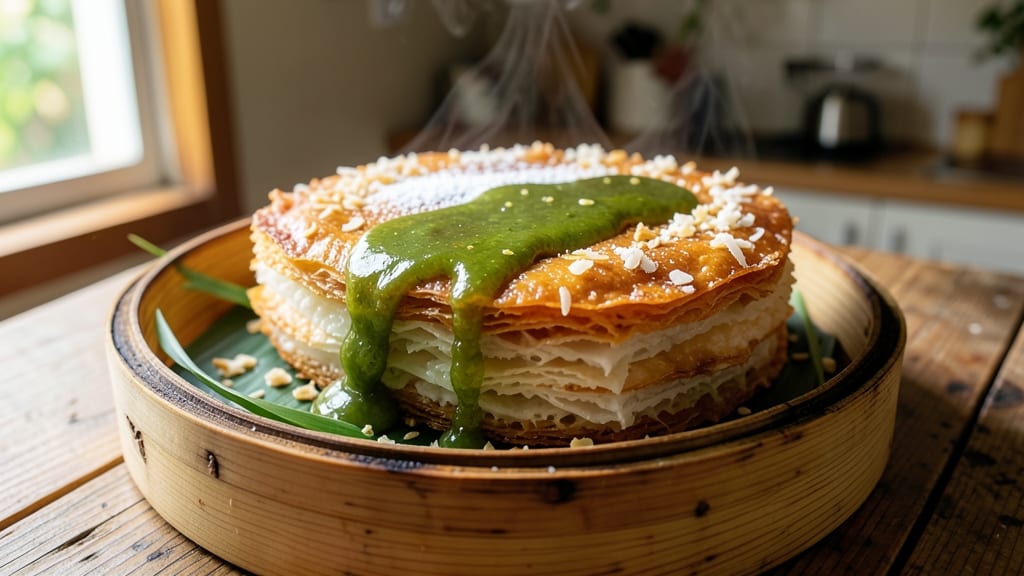
This Malaysian steamed rice cake recipe delivers the delicate, fragrant layers of tradition—pandan-scented softness that melts in your mouth while keeping its signature structure. The secret lies in the precise batter ratio and layered steaming technique, a method passed down through generations in Malaysian kitchens.
I first discovered this recipe during a visit to my grandmother’s home, where the aroma of pandan and coconut filled the air long before the cakes emerged from the steamer.
The process begins with a smooth, vibrant batter made from rice flour, coconut milk, and fresh pandan leaves, which infuse the mixture with their signature floral aroma.
What makes this recipe special is the 45-minute steaming time, where each layer builds upon the last, creating those signature thin, translucent sheets. The result is a dessert that’s both elegant and comforting—a perfect balance of textures and flavors that feels like a warm embrace.
By the time you’re done, you’ll have a stack of golden, fragrant rice cakes with tender layers that separate cleanly, revealing their delicate interior. The pandan scent lingers subtly, while the coconut adds a creamy richness that makes every bite irresistible.
This is dessert that feels like a celebration, whether served at family gatherings or as a special treat for yourself.
Traditional variations include adding grated coconut between layers or dusting with sesame seeds for extra texture. The equipment is simple—a steamer and heat source—but the technique ensures professional results every time. Let’s bring this Malaysian classic to your kitchen.
Ingredients for malaysian steamed rice cake
Nine essential ingredients transform into delicate, fragrant Malaysian rice cakes with pandan's signature aroma.
| Ingredient | Amount | Notes |
|---|---|---|
| Rice Flour 🍚 | 1 ½ cups | Glutinous rice flour preferred |
| Coconut Milk 🥥 | 1 can | Full-fat, unsweetened |
| Fresh Pandan Leaves 🌿 | 6 whole | Tender stems removed |
| Granulated Sugar 🍚 | ½ cup | White or light brown |
| Water 💧 | ½ cup | Room temperature |
| Salt 🧂 | ¼ tsp | Fine sea salt |
| Vegetable Oil 🫒 | 2 tbsp | For greasing steamer |
| Grated Coconut 🥥 | ½ cup | Fresh or unsweetened flakes |
| Sesame Seeds 🌰 | 2 tbsp | Toasted for garnish |
The pandan leaves are the heart of this recipe—fresh is non-negotiable for that authentic floral scent. Look for vibrant, bright green leaves at Asian markets or specialty grocery stores like H Mart or 99 Ranch. If you can't find fresh, frozen pandan works too, but thaw and squeeze out excess water first. The rice flour should be glutinous (also called sweet rice flour) for that signature chewy texture—regular rice flour won't give the same result. For coconut milk, full-fat canned versions like Aroy-D or Chaokoh deliver the richest flavor, but any unsweetened brand will work. The sugar balances the pandan's intensity, so don't skip it.
No pandan leaves? Vanilla extract (1 tsp) or pandan extract (1/2 tsp) can mimic the scent, though it won't be identical. Running short on rice flour? Tapioca starch can replace up to half the amount, but the texture will be slightly different. For the grated coconut, freshly grated is ideal, but unsweetened flakes work in a pinch—just toast them lightly in a dry pan for extra aroma. The sesame seeds can be omitted if you're allergic, but they add a lovely crunch. Pro tip: Toast the sesame seeds in a dry skillet for 2-3 minutes before using—they'll smell amazing and enhance the final presentation.
Store the batter in an airtight container in the fridge for up to 2 days—it actually improves as it rests. The steamed cakes keep at room temperature for 3 days in an airtight container, though they're best enjoyed fresh. For longer storage, freeze the steamed layers between parchment paper for up to 3 months. To reheat, steam for 5 minutes or microwave for 20 seconds—they'll be just as tender as when first made. These cakes make a stunning dessert for gatherings, so double the batch if you're hosting. The aroma alone will have guests lining up.
Why You'll Love This Recipe
- No-Fuss Setup: I swear by this recipe because it’s three bowls and a steamer—that’s it. No fancy gadgets, no last-minute grocery runs for obscure ingredients. Just blend rice flour, coconut milk, and pandan leaves until smooth, pour into a lined tray, and steam. My lazy Sundays now include these without guilt.
- Fragrant Magic: That first sniff of pandan-infused steam? Chef’s kiss. The leaves release this floral, vanilla-like aroma that turns plain rice flour into something luxurious. Honestly, the coconut milk adds a creamy richness that makes it taste like a dessert you’d pay for at a café—not something you whipped up in your kitchen.
- Party in a Box: Between us, these are my secret weapon for potlucks, office lunches, or even breakfast-for-dinner nights. They reheat beautifully (microwave or steam again) and look way more impressive than store-bought rice cakes. My daughter picks out the crispy edges first—because even kids know good food when they taste it.
- Budget-Friendly Luxury: Rice flour and coconut milk stretch far, and sugar adjusts to your sweet tooth. I make a big batch on Sundays, and they last all week—breakfast, snacks, or a quick side. No sad leftovers here; they’re gone before they get stale. (Yes, even on a Tuesday night.)
Step-by-step instructions for Malaysian steamed rice cake
Here's how to create tender, fragrant rice cakes with perfect texture every time.
Prepare the Pandan Infusion
In a small saucepan, combine the 6 whole fresh pandan leaves, 0.5 cup water, and 0.5 cup granulated sugar. Bring to a gentle simmer over medium heat and cook for 5-7 minutes until the liquid reduces slightly and becomes aromatic. You'll notice the vibrant green color deepen and a delicate fragrance fill your kitchen.
Remove from heat and let steep for 10 minutes. Strain through a fine-mesh sieve, pressing gently on the pandan leaves to extract every drop of flavor. Discard the leaves and set aside the infused pandan syrup - this is the heart of your cake's signature aroma. The syrup should be thick enough to coat the back of a spoon but still pourable.
Mix the Batter
In a large mixing bowl, whisk together the 1.5 cups rice flour and 0.25 tsp salt until fully combined. Create a well in the center and pour in the 1 can coconut milk and the reserved pandan syrup. Gradually incorporate the dry ingredients into the wet, mixing with a spatula until you achieve a smooth, lump-free batter.
Add the 0.5 cup grated coconut and mix thoroughly. The batter should be thick but still pourable - similar to pancake batter consistency. If it's too thick, add 1-2 tablespoons of water at a time until it reaches the proper texture. This ensures your cakes will steam evenly without being too dense.
Assemble and Steam
Lightly grease a 4-inch round cake pan with 2 tablespoons vegetable oil, coating both the bottom and sides. Pour the batter evenly into the prepared pan, smoothing the top with a spatula. Cover the pan tightly with aluminum foil, creating a seal to prevent steam from escaping.
Place the pan in a steamer basket over 2 inches of boiling water. Cover with a lid and steam over medium-high heat for 30 minutes. The steam should be vigorous but not boiling violently. After 20 minutes, check for doneness by inserting a toothpick - it should come out clean but slightly moist. If needed, steam for an additional 5-10 minutes until fully set.
Cool and Garnish
Remove the steamed cake from the pan and let it cool completely on a wire rack. This cooling process is crucial as it allows the cake to set properly and develop its characteristic soft yet firm texture. Once cooled, carefully invert the cake onto a serving plate to reveal its beautifully domed top.
Lightly toast the 2 tablespoons sesame seeds in a dry skillet over medium heat for 1-2 minutes until golden and fragrant. Sprinkle evenly over the cooled cake just before serving. The toasted sesame seeds add a delightful nutty contrast to the sweet pandan flavor, completing this traditional Malaysian dessert.
Pro Tips For Making Malaysian Steamed Rice Cake
- Sift the Flour Twice: Rice flour clumps like a jealous ex—no matter how hard you stir. Sift it through a fine-mesh sieve into your mixing bowl first, then whisk in the coconut milk before adding sugar. This cuts out lumps faster than a chef’s knife through butter, and your batter will be silky instead of grainy.
- Blend Pandan Roughly: Fresh pandan leaves need a good smackdown. Tear them into 1-inch pieces, then pulse in a blender with ½ cup water until it looks like a bruised green smoothie—not a puree. Strain out the fibers if you’re picky, but I leave them in for texture. (Yes, you’ll taste them. That’s the point.)
- Steam on Medium-High: Low heat turns your cake into a sad, gummy brick. Crank your steamer to medium-high and let it scream for the first 10 minutes—this drives out excess moisture fast. Then drop to low for 20–25 minutes, or until the edges pull away from the mold. (Pro move: Poke with a skewer. It should come out clean.)
- Chill the Batter: Skip this, and your cake will rise like a hot air balloon—then collapse like one too. Mix your batter, cover it, and refrigerate for at least 30 minutes. The cold tightens the gluten (yes, rice flour has it), so your cake holds its shape instead of oozing into a puddle. (Bonus: Less sticking when unmolding.)
Regional styles of this malaysian steamed rice cake
Penang's Pandan Layers
The most iconic version comes from Penang, where the batter is layered with fresh grated coconut between each steamed sheet. Locals use a special 4-layer steamer mold made of bamboo or silicone, creating delicate, translucent sheets that separate cleanly.
I've seen street vendors in George Town use charcoal stoves for steaming, maintaining consistent heat without electricity. The secret? Using young pandan leaves—they're more tender and infuse the batter with a brighter aroma. For authenticity, add ½ tsp pandan extract to the batter if fresh leaves are unavailable. 🌿
Johor's Coconut Variations
In Johor, they take the coconut theme further by incorporating toasted coconut flakes directly into the batter. The result is a denser, more textured cake with a nutty depth. I once made this version using desiccated coconut (the kind in small flakes) and toasted it separately for extra crunch.
Another Johor twist is adding ½ tsp vanilla extract alongside the pandan for a dual-flavor experience. The steaming time increases slightly to 35 minutes due to the extra coconut content.
Malacca's Sesame Twist
Malacca's version stands out with its black sesame seeds instead of the usual white. The seeds are toasted until fragrant and sprinkled between layers, creating striking visual contrast. I've found that Malaysian black sesame paste (available at Asian markets) can be mixed into the batter for an even deeper flavor.
For a Malacca-style presentation, dust the finished cake with icing sugar after slicing. The combination of pandan and black sesame creates a sophisticated flavor profile that feels distinctly coastal. 🌟
Modern Fusion Adaptations
Today's chefs are putting creative spins on this classic. I've seen matcha-pandan versions using 1 tsp matcha powder alongside the pandan, creating a stunning green-and-white layered effect. Another trend is adding red bean paste between layers for a sweet-savory contrast.
For a tropical twist, some home cooks incorporate mango puree (about ¼ cup) into the batter. The steaming time remains similar, but the batter consistency may need adjustment—these variations often require 1-2 extra tablespoons of water.
Regional Equipment Differences
While most recipes use standard steamer baskets, some regions have unique tools. In rural areas, bamboo steamers with removable layers are common—they create perfectly even sheets. For home cooks, a lasagna pan works well as a makeshift steamer mold.
I've also seen electric rice cookers adapted with steaming racks for hands-off cooking. The key is maintaining steady heat—never let the water boil dry during steaming, or your layers will cook unevenly. A digital thermometer set to 212°F helps monitor water temperature for consistency. 💡
Special Occasion Versions
For festive occasions like Hari Raya or Chinese New Year, some families create multi-colored layers using natural dyes. Turmeric (½ tsp) for yellow and spirulina powder (¼ tsp) for green create beautiful effects. I've also seen gold leaf dusted on top for luxury presentations.
Another special version replaces sugar with palm sugar for a deeper caramel note. These versions often require 5-10 extra minutes of steaming to develop the colors properly. The extra effort is worth it for celebrations! ✨
Nutrition facts
Frequently asked questions
What's the difference between Kuih Lapis and Kuih Dadar?
Both are Malaysian steamed rice cakes, but Kuih Lapis has distinct layers created by steaming in a special mold, while Kuih Dadar is a single thick layer. Kuih Lapis uses coconut milk and pandan for its signature flavor, while some Dadar versions may include grated coconut between layers. The steaming time for Lapis is 30-45 minutes to create those delicate sheets.
Can I make this without fresh pandan leaves?
Yes! Use ½ tsp pandan extract or 1 tsp vanilla extract as a substitute. For color, add a pinch of green food coloring (optional). The aroma won't be identical, but it'll still taste delicious. If using extract, reduce sugar slightly to ¼ cup since extracts are concentrated.
Why did my rice cake turn out dense instead of soft?
Overmixing the batter or insufficient steaming time usually causes this. The batter should be smooth but not thick—add 1-2 tbsp water if needed. Steam for the full 30 minutes (or until a toothpick comes out clean). Also, ensure your steamer has enough water—boiling dry creates uneven heat.
How do I store or reheat these cakes?
Keep at room temperature in an airtight container for up to 3 days. For longer storage, freeze the steamed layers (separated by parchment) for 3 months. To reheat, steam for 5 minutes or microwave for 20 seconds. Avoid refrigerating—it makes them dry out faster.
Can I make this gluten-free?
Yes! Replace the rice flour with glutinous rice flour (naturally gluten-free) or a 1:1 gluten-free rice flour blend. The texture will be slightly different but still delicious. For extra binding, add 1 tbsp tapioca starch to the batter. Test steaming time—gluten-free versions may need 5 extra minutes to set properly.